Metamask Card – Everything We Know About It in 2025

Contents
- MetaMask Card is Different from Other Crypto Cards?
- The Technology Behind MetaMask Card
- Getting Started with MetaMask Card
- Supported Cryptocurrencies and Networks
- Global Availability: The Reality Check
- Understanding the Fee Structure
- The MetaMask Metal Card: Premium Experience
- Rewards and Benefits Structure
- Security and Self-Custody: The Core Advantage
- MetaMask Card vs. Other Crypto Cards: An Honest Comparison
- The Tough Questions About MetaMask Card
- Future Developments and Roadmap
- Tax Implications and Reporting
- Is the MetaMask Card Right for You?
- The MetaMask Card: Promise vs. Reality
Some links in this article are affiliate links. We may earn a commission if you sign up through them, at no extra cost to you. How we handle affiliate links.
Looking to buy a Metamask card? Don’t… at least before knowing some of the things I am about to mention in this article below
The crypto world faces a persistent challenge: spending digital assets in everyday life remains unnecessarily complex.
The typical process involves moving funds to an exchange, converting to fiat, transferring to your bank, and finally spending.
This multi-step journey not only wastes time but also fundamentally contradicts crypto’s promise of financial sovereignty by forcing exposure to centralized control.
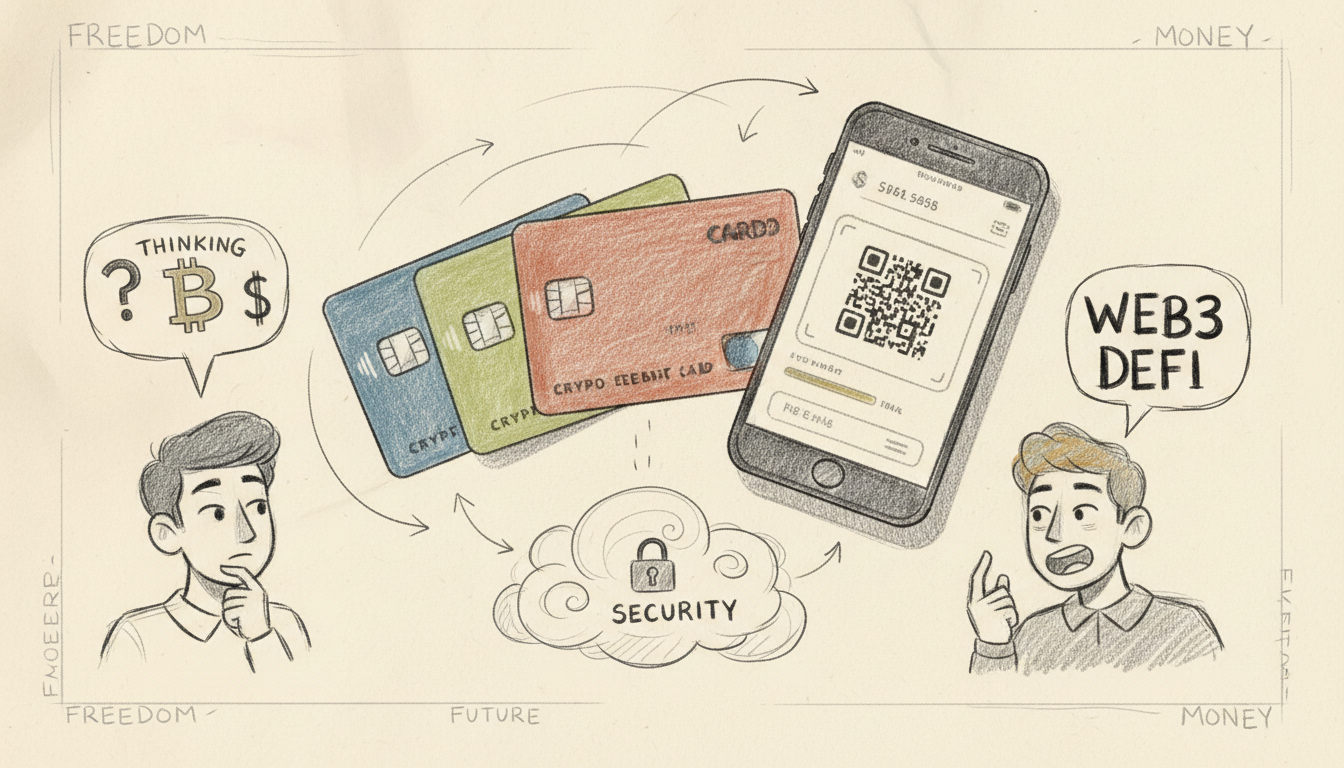
The MetaMask Card represents an interesting change to this system. It promises to maintain self-custody until the moment of purchase and calls it “the best available crypto card in the market”
But does it live up to the hype, and is it actually available for most users?
MetaMask Card is Different from Other Crypto Cards?

The MetaMask Card isn’t the first crypto debit card, but it stands out in one critical aspect: true self-custody. Unlike cards from exchanges like Binance or Crypto.com, you maintain control of your assets until the moment of purchase IN YOUR METAMASK WALLET.
Developed through a collaboration between ConsenSys (creators of MetaMask), Mastercard, and banking technology provider Baanx, this card enables direct spending from your self-custody wallet. This is something previously impossible without surrendering control to intermediaries.
Lorenzo Santos, senior product manager at Consensys, describes it perfectly:
“We’re removing the friction that has traditionally existed between blockchain and traditional payments. This is a paradigm shift that offers the best of both worlds.”
Traditional crypto cards require you to deposit funds onto their platform, effectively surrendering custody. The MetaMask Card fundamentally changes this model.
Your assets remain in your MetaMask wallet until you make a purchase. Only at the point of transaction are they converted and spent.
This innovation maintains the core ethos of crypto – self-sovereignty – while providing the convenience of traditional payment cards.
The Technology Behind MetaMask Card
The MetaMask Card runs on Linea, an Ethereum Layer 2 scaling solution developed by ConsenSys. This technical foundation provides several advantages:
First, transactions occur with minimal gas fees – typically between 0.015 to 0.035 USDC per transaction based on real-world usage.
This efficiency makes small purchases practical, something that would be prohibitively expensive on the Ethereum mainnet.
Second, settlement happens nearly instantly. When you tap your card at a terminal, the conversion from crypto to fiat and settlement to the merchant happens in seconds, not minutes or hours.
The technology stack also incorporates Mastercard’s payment infrastructure, enabling acceptance anywhere Mastercard is accepted – both online and in physical stores worldwide.
Security is enhanced through the combination of blockchain transparency and Mastercard’s dispute management process.
This addresses a major concern with crypto transactions – their irreversible nature. With the MetaMask Card, you gain chargeback protections similar to traditional payment cards.
The system also implements robust know-your-customer (KYC) and anti-money-laundering protocols, addressing regulatory concerns that have historically limited crypto card adoption. Know that Metamask is NOT a no-kyc crypto credit card but aligns more towards regulations.
Getting Started with MetaMask Card
Setting up the MetaMask Card is surprisingly straightforward, especially compared to traditional banking applications. Users report completing the entire process in minutes rather than days.
The setup process requires:
- A MetaMask wallet with the latest version of the app (Or Chrome extension)
- Completion of KYC verification (identity confirmation)
- Bridging funds to the Linea network
- Setting spending limits for your card
The KYC process is streamlined compared to most banking applications. It took me around 24 hours to get a reply from the team after I applied. You’ll need to provide standard information like your name, address, email, phone number, and date of birth.
This verification process is significantly faster than traditional banks, including digital banks like Wise or Revolut.
Once verified, you’ll need to bridge funds to the Linea network if you haven’t used it before. This process is identical to using any other cryptocurrency bridge.
After adding funds, you set spending limits for each supported cryptocurrency. You can choose specific limits or set them to unlimited to avoid constantly updating limits (and paying associated gas fees) when you reach your maximum.
The digital card becomes immediately available for use through Apple Pay or Google Pay integration. This means you can start spending your crypto immediately, without waiting for a physical card to arrive.
Supported Cryptocurrencies and Networks
Currently, the MetaMask Card supports three cryptocurrencies on the Linea network:
- USDC (USD Coin)
- USDT (Tether)
- WETH (Wrapped Ethereum)
The focus on stablecoins makes sense for a spending card, as price volatility is minimized. Including WETH provides flexibility for Ethereum holders without forcing an immediate conversion to stablecoins.
The limitation to the Linea network is noteworthy. While this ensures low transaction fees and quick settlement times, it does mean users need to bridge assets from other networks if they primarily hold funds elsewhere.
ConsenSys has indicated plans to expand both token and network support in future updates. The infrastructure is designed to be extensible, potentially supporting additional stablecoins and networks as the ecosystem evolves.
One current limitation for European users is the lack of EUR-based stablecoins. This means European spending incurs currency conversion at Mastercard’s exchange rates, which typically include a small premium compared to spot rates according to the latest official update. This is expected to be addressed in future updates.
Global Availability: The Reality Check
Despite the promising technology, the MetaMask Card faces significant availability limitations. Currently, the card is officially available in only a handful of regions:
- Argentina
- Brazil
- Colombia
- European Economic Area (EEA) – primarily on waitlist
- Mexico
- Switzerland
- United Kingdom
- United States (excluding New York and Vermont)
To be honest, this is not a big list. In contrast, other players like Redotpay is currently available in 140 countries. And same is with other top crypto credit cards
This rollout means most crypto users worldwide cannot access the card. Even in supposedly “available” regions like the European Union, most users can only join a waitlist with uncertain wait times.
This restricted availability poses a major challenge for MetaMask’s ambitions of mainstream adoption. While ConsenSys claims plans for expansion, no concrete timeline exists for most regions globally.
For those lucky enough to access it, the card functions like any standard Mastercard debit card – working at physical terminals, online checkouts, and with mobile wallets like Apple Pay and Google Pay.
The payment experience mirrors traditional cards, with the crypto-to-fiat conversion happening behind the scenes.
Understanding the Fee Structure
The MetaMask Card’s fee structure is straightforward but includes several components users should understand:
- Gas fees: Each transaction incurs a small gas fee on the Linea network, typically 0.015-0.035 USDC. While minimal, these fees accumulate with frequent use.
- Currency conversion: When spending in currencies different from your stablecoin denomination, Mastercard’s conversion rates apply. These rates typically include a small premium compared to interbank rates.
- Transaction fees: A small percentage fee applies to each transaction. This fee is competitive with other crypto cards but should be factored into overall costs.
For most users, these fees remain lower than the multi-step process of moving crypto to an exchange, converting to fiat, transferring to a bank, and then spending.
The MetaMask Metal Card: Premium Experience
ConsenSys has announced a limited-edition physical MetaMask Metal Card, representing the premium tier of their card offering.
While the standard digital card provides full functionality, the Metal Card adds several exclusive benefits:
The Metamask Metal Card features a distinctive chromatic Fox design that stands out from traditional payment cards.
Beyond aesthetics, it offers enhanced rewards, exclusive event access, and various surprise perks for holders.
The Metal Card will be available through a limited drop, with priority access for early adopters and active MetaMask users. Details on qualification criteria haven’t been fully disclosed, but joining the waitlist ensures you’ll be notified when the cards become available.
For crypto enthusiasts, the Metal Card represents both functional benefits and a status symbol – physical proof of participation in the evolution of finance. The limited availability creates additional exclusivity and collector appeal.
Rewards and Benefits Structure
The MetaMask Card includes a multi-layered rewards system that enhances its value proposition beyond simple spending functionality:
Crypto cashback rewards users on every purchase, adding a passive accumulation mechanism similar to traditional cashback cards but denominated in cryptocurrency.
Yield generation on balances allows users to earn returns on unspent funds, leveraging DeFi protocols without requiring manual staking or yield farming.
The MetaMask partner network provides additional benefits, though specific details on partner relationships remain limited at this time.
The rewards structure represents a significant advantage over traditional payment cards, where interest on positive balances is typically minimal or non-existent. It also creates a compelling reason to keep funds in the MetaMask ecosystem rather than converting back to traditional banking.
For frequent spenders, these rewards can substantially offset the transaction fees associated with using the card, potentially making it more economical than traditional payment methods in certain scenarios.
Security and Self-Custody: The Core Advantage
The defining feature of the MetaMask Card is its self-custody model. This approach fundamentally changes the security dynamics compared to traditional crypto cards.
With exchange-based cards, you deposit funds into a custodial wallet controlled by the exchange.
This creates counterparty risk – if the exchange faces liquidity issues, a hack, or regulatory challenges, your funds could be inaccessible or lost entirely.
The MetaMask Card eliminates this risk by keeping your assets in your self-custody wallet until the moment of purchase.
This means:
- You maintain control of your private keys
- Your funds cannot be frozen by a third party
- You’re protected from exchange insolvency risks
- Your assets remain on-chain and transparent
This security model is combined with Mastercard’s traditional fraud protection and dispute resolution mechanisms.
This hybrid approach provides the best of both worlds – the self-sovereignty of crypto with the consumer protections of traditional finance.
The system also includes Mastercard’s standard anti-fraud measures and the ability to freeze your card if lost or stolen. These features address common concerns about cryptocurrency security without compromising on the core value of self-custody.
MetaMask Card vs. Other Crypto Cards: An Honest Comparison
Let’s evaluate how the MetaMask Card stacks up against key competitors in the crypto card market:
MetaMask vs. RedotPay Card
The RedotPay card offers immediate availability in over 100 countries without waitlists, giving it a significant advantage over MetaMask’s limited rollout. RedotPay supports more cryptocurrencies including BTC, ETH, USDT, USDC and others, while charging competitive fees as I discussed earlier.
Unlike MetaMask’s self-custody approach, RedotPay operates on a custodial model, requiring you to deposit funds to their platform first.
However, RedotPay compensates with higher cashback rates, instant issuance, and wider global accessibility.
For most users, especially those outside MetaMask’s supported regions, RedotPay offers a more practical solution today. Its established track record and immediate availability make it the superior choice for anyone wanting to start spending crypto quickly.
MetaMask vs. Crypto.com Card
Crypto.com requires staking their native token for better rewards and uses a custodial model. While it delivers higher cashback rates, you surrender asset control. MetaMask’s self-custody approach offers theoretically better security but fewer perks.
MetaMask vs. Binance Card
Binance supports more currencies but requires custody surrender. Its competitive fee structure and global availability outshine MetaMask’s limited rollout, making it preferable for most international users despite the custody tradeoff.
The fundamental question: is MetaMask’s self-custody model worth the tradeoffs in availability, token support, and rewards? For most users seeking practical utility today, established alternatives like RedotPay deliver superior real-world value.
The Tough Questions About MetaMask Card
While the concept sounds promising, several critical questions remain unanswered about the MetaMask Card:
Why is availability so limited despite partnerships with established companies like Mastercard?
The card launched with substantial fanfare but remains inaccessible to most global users. This raises concerns about underlying regulatory challenges or technical limitations.
How does MetaMask justify the Linea network requirement? Forcing users to bridge assets to a specific Layer 2 solution creates additional friction, contradicting the card’s supposed goal of simplifying crypto spending.
What happens if Linea faces technical issues? With all card functionality dependent on a single Layer 2 network, users face concentration risk not present in more diversified solutions.
When will the card actually become available to most users? The waitlist approach with no transparent timeline creates uncertainty that competitors like RedotPay avoid entirely by offering immediate access.
Limited feedback from actual users exists due to restricted availability. The few public reviews note the expected benefits of merchant acceptance and self-custody, while highlighting frustrations with limited token support and the need for users to handle the bridging process to Linea.
For a product claiming to simplify crypto spending, the MetaMask Card paradoxically introduces new complexities that alternatives have already solved.
Future Developments and Roadmap
ConsenSys has indicated several planned improvements for the MetaMask Card ecosystem:
Expanded token support is a priority, with additional stablecoins likely to be added first, particularly EUR-denominated options for European users.
Additional network support could extend the card’s functionality beyond Linea, potentially incorporating other Ethereum L2 solutions or even separate blockchain ecosystems.
The physical Metal Card rollout will bring tangible benefits for premium users and enhance the brand’s presence in physical retail environments.
Enhanced rewards programs are expected to develop as the user base grows and more partners join the ecosystem.
These developments will strengthen the MetaMask Card’s position as both a practical spending tool and a bridge between traditional finance and the self-custody crypto ecosystem.
Tax Implications and Reporting
Using the MetaMask Card does have tax implications users should understand. In most jurisdictions, spending cryptocurrency is considered a taxable event – essentially selling crypto for fiat at the point of purchase.
The MetaMask Card simplifies compliance by providing downloadable transaction records.
- Transaction amount in both crypto and fiat
- Exchange rate at time of transaction
- Date and time of purchase
- Merchant information
This data can be essential for accurate tax reporting, though specific requirements vary by jurisdiction. Users should consult with tax professionals in their region for definitive guidance.
The transparent nature of blockchain transactions provides an audit trail that can simplify tax compliance compared to other crypto spending methods, though the responsibility for reporting remains with the user.
Is the MetaMask Card Right for You?
The MetaMask Card might be suitable for a narrow slice of crypto users:
- Those living in the few supported regions who have already cleared the waitlist
- Ethereum ecosystem enthusiasts who primarily use Linea Layer 2
- Users willing to sacrifice immediate availability and broader token support for self-custody principles
- People already heavily invested in the MetaMask ecosystem
For most others, alternatives like RedotPay make more practical sense due to:
Immediate availability across 100+ countries without waitlists.
The MetaMask Card: Promise vs. Reality
The MetaMask Card presents an intriguing concept in how we might interact with cryptocurrency. Its self-custody model theoretically preserves the core value proposition of cryptocurrency while leveraging traditional payment rails.
The technology addresses a fundamental challenge – bridging self-custody wallets with everyday spending. If widely implemented, this approach could enhance cryptocurrency’s practical utility while maintaining its philosophical underpinnings.
However, the reality today falls short of the promise. Severe availability limitations, restricted token support, and uncertainty around global expansion timelines mean that for most crypto users, the MetaMask Card remains more theoretical than practical.
Is this the future of crypto spending?
Possibly. But the present belongs to more accessible solutions like RedotPay that prioritize actual utility over ideological purity.
The perfect crypto card balances security, accessibility, and usability – a combination MetaMask has yet to achieve at scale.
For the small percentage of users who can access it in supported regions, the MetaMask Card offers a glimpse of what crypto spending could become. For everyone else, the wait continues – or alternatives await.
Related tools
Keep reading
Bybit Card Review 2026: Fees, Cashback, and Availability
Read our Bybit Card review for 2026. See cashback tiers, staking requirements, fees, and where it's available. Get the facts before you apply.
The Complete Guide to Binance Card: Features, Benefits, and How to Get Started in 2025
Important Notice: As of the recent update, the Binance Card is temporarily unavailable. According to latest sources, Binance has stated they will be resuming

Visa Mastercard Alternative Crypto Card: What Works in 2026
A visa mastercard alternative crypto card runs on UnionPay, Amex, Discover, or stablecoin rails. Compare 2026 availability, fees, and KYC before you apply.