We Reviewed the Best Crypto Cards: 2 Didn't Make the Cut
Contents
- TL;DR: Best Crypto Cards of 2026 (Quick List)
- What Actually Makes a Crypto Card “Best” in 2026?
- How Crypto Cards Work
- How I Ranked These Cards
- What $1,000 a Month Actually Costs on Each Card
- The Best Crypto Cards of 2026 (In-Depth Reviews)
- Other Cards Worth Knowing
- The Best Crypto Card by Country
- Cards I Removed From This List
- Understanding the KYC system for Cryptocurrency Cards
- Custodial vs Self-Custody Crypto Cards
- How Crypto Card Rewards Actually Work
- Real User Experiences and Warnings
- Final Verdict: Choose Based on Use Case, Not Hype
- What Changed in This Update (September 2026)
Some links in this article are affiliate links. We may earn a commission if you sign up through them, at no extra cost to you. How we handle affiliate links.
Looking for the best crypto card available in your country? Possibly with minimal KYC options?
To be brutally honest, most crypto card reviews online are regurgitated junk.
They repeat press release nonsense, parrot outdated Reddit opinions, and ignore what actually matters: How these crypto debit cards work in real life for real users.
I’ve personally researched and analysed over a dozen crypto cards, combed through their hidden terms, crunched real usage fees, and even got hit with staking lockups so you don’t have to.
Whether you’re a remote worker, frequent traveler, or just someone who’s sick of converting crypto manually every time you buy coffee, this list is for you.
I first published this ranking in April 2025. For this September 2026 update, I re-checked every fee, reward and country rule against each issuer’s own pages. Two of my 2025 picks no longer exist in the form I recommended, and several new cards have overtaken the old ones.
Let’s break down the absolute best cryptocurrency cards of 2026 without the BS.
TL;DR: Best Crypto Cards of 2026 (Quick List)
- Best Overall: KAST – free virtual card in most regions, 1.5% cashback in dollars, and KAST says it works in 170+ countries including the US
- Highest Cashback: ether.fi Cash – 3% on your first $2,000 a month, and your crypto stays in your own wallet
- Lowest Fees in Europe: OKX Card – No card or FX fee, only a 0.1% spread, plus 2% cashback on USDG
- Best Self-Custody Card for Europe and Latin America: MetaMask Card – Free, 1% cashback, spends straight from your MetaMask wallet
- Best for Global Access and Cash Withdrawals: RedotPay – about 200 countries, $1,000,000 daily limit, physical card with ATM access
- Highest Rewards If You Stake: Crypto.com – Up to 5% back, but only with a large 12-month CRO lockup
- Best for HODLers: Nexo – Spend against crypto collateral without selling
- Best for US Credit Users: Gemini Credit Card – Up to 4% back in crypto, no annual or FX fee
- Best for US Beginners: Coinbase Card – Free prepaid Visa, no fees when you spend USDC
⚡ Pro Tip: Crypto card terms change frequently. Bookmark this post. We update it with the latest terms, fees and rewards.
Not sure which cards you can get? Our crypto card finder filters every card by the country you live in.
What Actually Makes a Crypto Card “Best” in 2026?
Here’s what actually matters when choosing the right cryptocurrency card:
- No Staking Traps: You shouldn’t have to lock $5,000 in a volatile token to get decent cashback
- Global Availability: Works across borders without unexpected restrictions
- Low Real Fees: Not just advertised zero fees, but spread, foreign transaction fees, ATM, and inactivity costs
- Stablecoin Support: Must work with USDT, USDC, not just BTC or ETH
- Clear Custody: You should know whether the company holds your funds or you do
- Minimal or Optional KYC: Privacy isn’t dead. You deserve the choice
- Mobile Wallet & Apple Pay Support: Crypto cards should be as smooth as traditional fintech
“In 2026, a crypto card isn’t a luxury. It’s a necessity for anyone who lives in crypto full-time.”
How Crypto Cards Work
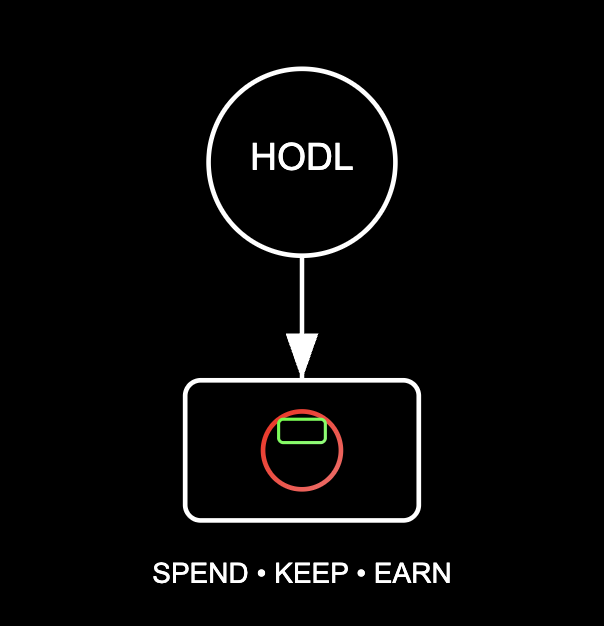
A crypto card is a normal Visa or Mastercard payment card with a crypto balance behind it. The merchant receives ordinary fiat money and never touches your crypto.
The card issuer, usually a licensed e-money firm or bank, handles the crypto-to-fiat conversion at the point of sale. That conversion is where most of the real cost sits, through a conversion fee, a spread or the exchange rate used.
Crypto cards come in three types:
- Debit cards spend from a balance you already hold. That balance can sit in an exchange account (Coinbase), an app wallet (RedotPay, KAST) or your own wallet (MetaMask, ether.fi Cash, OKX Pay in Europe).
- Credit cards give you a credit line and pay rewards in crypto. The Gemini Credit Card spends dollars, while Nexo’s Credit Mode borrows against crypto you already hold.
- Prepaid cards need topping up before you spend. The Crypto.com and Coinbase cards are prepaid, which caps what you can lose if the card is compromised.
The type decides your tax position too. A debit or prepaid card that spends crypto sells it at checkout. A credit card that spends dollars doesn’t sell anything.
How I Ranked These Cards
Every card on this list was scored on the same five questions. Could a normal user get it today? What does it cost at $1,000 a month of spending? What does it pay back without staking or a subscription?
The last two questions cover custody and freshness. Who holds your money, and what happens if they freeze it? And when did the issuer last change the terms?
Headline rewards count for less than you’d expect. A 10% rate that needs $100,000 in assets, or a 5% rate that needs €450,000 of locked tokens, doesn’t help a typical reader. I ranked each card on what a regular user actually gets.
What $1,000 a Month Actually Costs on Each Card
This is the comparison I wanted when I first started using crypto cards. It assumes you hold stablecoins, spend $1,000 a month and use no ATM. A fifth of that spending is in a foreign currency, so foreign transaction fees count.
- ether.fi Cash (Core, spending in USD): about $360 a year back in ETHFI, minus roughly $24 to $36 in FX. Net gain of about $325 to $335.
- OKX Card (Europe, paying with USDG): $240 a year back, minus $12 in spread. Net gain of about $228.
- KAST (Standard): $180 a year back, minus $12 to $42 in FX. Net gain of $136 to $166, less a $2 virtual card fee in the regions that charge one.
- MetaMask Card (virtual, with a local-currency stablecoin): $120 back, minus $24 in cross-border fees. Net gain of about $96.
- Coinbase Card (US, spending USDC): no fees, and rewards vary. Roughly break-even before rewards.
- Crypto.com (free Midnight tier, Europe): no cashback, and a 2% FX fee on non-EUR spending outside the EU and the UK. Net cost of about $48.
- RedotPay (virtual card, spending in the card’s currency): $10 card fee, $120 in conversion fees and about $29 in FX. Net cost of about $159 in the first year.
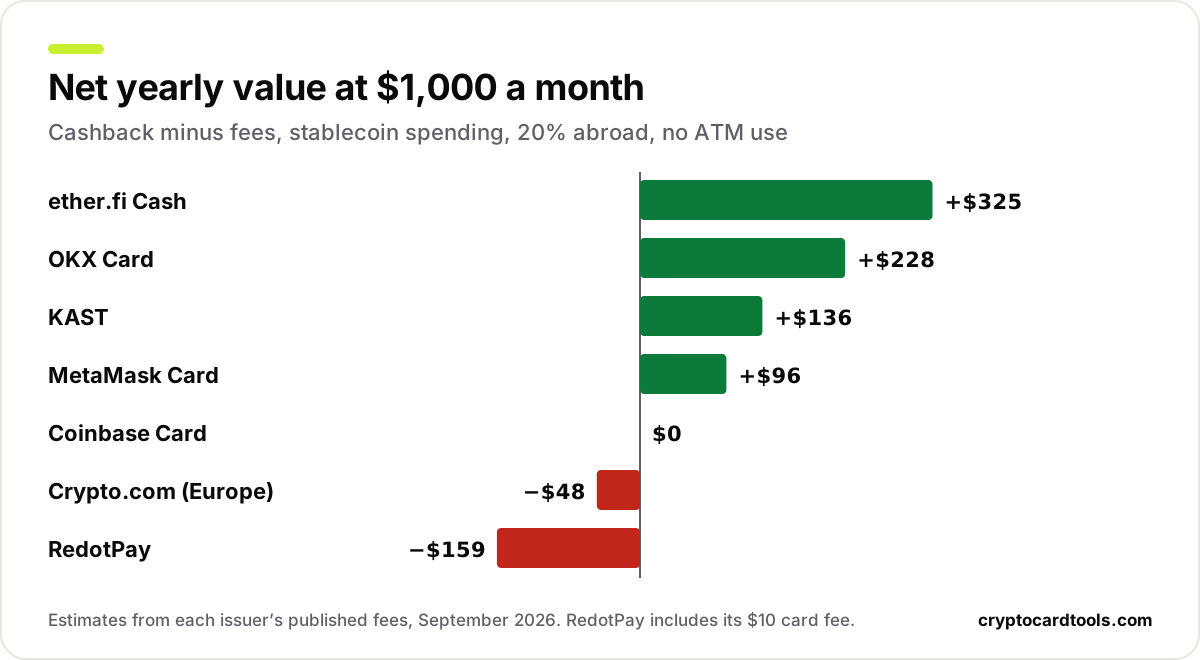
Two things stand out. Self-custody and stablecoin-first cards now pay more than the big exchange cards. And RedotPay, my top pick in 2025, costs money to use, even though it wins on reach and limits.
You can plug in your own spending and compare up to four cards in our card cost calculator.
The Best Crypto Cards of 2026 (In-Depth Reviews)
KAST: Best Overall
- Cashback: 1.5% in USD on the first $2,000 a month (Standard tier)
- KYC: Full
- Staking: Not required
- Fees: Two free virtual cards ($2 in some regions), no fee on stablecoin deposits, 0.5% to 1.75% FX
KAST turns a stablecoin balance into a Visa card that, according to KAST, works in 170+ countries, including the US. That coverage is the reason it tops this list: few cards pay real cashback and accept US residents at the same time.
It is stablecoin-first. USDT, USDC and other stablecoins deposit across 10+ chains with no fee beyond the network’s own. KAST also accepts 25+ other coins, but their conversion fee varies by token, so the card suits people who already hold dollars on-chain.
The paid tiers raise the rate. Premium costs $1,000 a year for 2% on up to $10,000 a month, and Private costs $10,000 a year for 3% on up to $40,000.
Pros:
- Cheap to start, with cashback paid in dollars rather than a volatile token
- Works in the US and, by KAST’s count, 170+ countries
- Apple Pay and Google Pay supported
- No deposit fee on stablecoins
Cons:
- Custodial: KAST holds your USD balance
- ATM withdrawals cost $3 plus 2%, capped at $250 per withdrawal
- Not available everywhere, and KAST confirms eligibility only during sign-up
- Volatile crypto deposits carry a conversion fee that varies by token
Best For: Stablecoin holders almost anywhere, including the US, who want simple cashback without staking. You can see how it stacks up in RedotPay vs KAST and KAST vs OKX Card, or check its safety score.
ether.fi Cash: Highest Cashback
- Cashback: 3% on the first $2,000 a month (Core), then 1% up to $3,000, then 0.5%
- KYC: Full
- Staking: Not required
- Fees: About 1% base FX rate plus up to 0.5% on Core, ATM withdrawals up to $1,000 each and five a day
ether.fi Cash pays the highest no-subscription cashback on this list, and your funds stay in your own smart-contract account. ether.fi never takes custody of them.
It also lets you borrow against staked ETH instead of selling it, so your ETH keeps earning yield while it backs your spending.
The catch is the reward currency. Cashback is paid in ETHFI, ether.fi’s own token, so its real value moves with the token price. Euro transactions also earn much lower cashback than dollar spending.
Pros:
- 3% cashback on the entry Core tier, the highest here without a subscription
- Self-custodial
- Available in 90+ countries, including the UK, the UAE, Nigeria, Indonesia, the Philippines and 31 US states
- Spend against staked ETH without selling it
Cons:
- Rewards paid in the ETHFI token, not cash
- Lower cashback on euro spending
- Not available in India, Pakistan or the Netherlands
- Borrowing against collateral carries liquidation risk if ETH falls sharply
Best For: Crypto-native users who spend in dollars and are comfortable managing their own wallet. The head-to-heads are in KAST vs ether.fi Cash and MetaMask Card vs ether.fi Cash.
OKX Card: Lowest Fees in Europe
- Cashback: 2% in USDG for regular users, capped at €50 a month in Europe
- KYC: Full
- Staking: Not required
- Fees: No card fee, no FX fee, 0.1% conversion spread
The OKX Card is the cheapest way to spend stablecoins in Europe. OKX charges only a 0.1% spread when your USDC or USDG converts to euros, which is about €1 on €1,000.
Cashback only applies to USDG purchases. Regular users get 2%, and the 10% headline rate needs OKX VIP status, which starts around $100,000 in assets.
The card also works in Singapore, Australia, Brazil, Ghana, Nigeria, Rwanda, South Africa, Uganda and Pakistan. Terms differ in each region, which I cover in my full OKX Card review.
Pros:
- The lowest conversion cost of any card on this list
- 2% cashback with no lockup
- Regulated in the EU under MiCA and a Malta payment institution licence
- Apple Pay and Google Pay supported
Cons:
- Virtual-only in Europe, so no ATM withdrawals
- No USDT spending in Europe
- Cashback caps are tiny outside Europe ($5 a month in Africa and Pakistan)
- Not available in the US, the UK or India
Best For: European stablecoin holders who want the lowest possible spending cost. The full fee table is on our OKX Card page.
MetaMask Card: Best Self-Custody Card for Europe and Latin America
- Cashback: 1% in mUSD (virtual), 3% on the first $10,000 a year (Metal, $199 a year)
- KYC: Full
- Staking: Not required
- Fees: Free virtual card, 1% cross-border, 0.5% when your stablecoin doesn’t match the spending currency
The MetaMask Card spends straight from your MetaMask wallet on Linea, Base, Solana or Monad. Your crypto stays in your wallet until the second you pay.
It is open in 45 countries across Europe and Latin America, plus Canada. Europeans can spend EURe and British users GBPe, which avoids stablecoin conversion fees entirely.
New sign-ups are paused in the US and the UK, and Metal card orders have been paused since June 2, 2026.
Pros:
- True self-custody with Mastercard acceptance
- Free virtual card with 1% cashback
- Euro and pound stablecoins supported
- Apple Pay and Google Pay supported
Cons:
- Not available in Asia or Africa
- US and UK sign-ups currently paused
- Metal card can’t be ordered right now
- Spending approvals need care, since an unlimited allowance lets the card contract pull any amount of that token
Best For: Self-custody users in Europe and Latin America.
RedotPay: Best for Global Access and Cash Withdrawals
- Cashback: None on the standard card (3% on Apple Pay and Google Pay with the $12.90 a month Pro plan, capped at 18 USDs); every spend also earns points for RedotPay’s prize draws
- KYC: Full (ID and face scan)
- Staking: Not required
- Fees: $10 virtual or $100 physical card, 1% conversion, 1.2% FX, 2% to 3% ATM
RedotPay has quietly become the go-to option for users who want global accessibility without staking.
It works in about 200 countries and territories and has some of the highest limits in the market: $100,000 per transaction and $1,000,000 a day. The physical card works at ATMs, which most cards on this list don’t offer.
That reach has a cost. With no cashback on the standard card, RedotPay is one of the more expensive cards here for everyday spending. It also stopped issuing cards in India, Indonesia and Turkey in September 2026.
Pros:
- Available in about 200 countries and territories across Asia, Africa, Latin America and the Middle East
- Instant virtual cards
- Physical card with ATM withdrawals up to $3,750 a day
- Very high spending limits
- Spends BTC, ETH and a dozen other assets, not just stablecoins
- Bank and e-wallet transfers, P2P and swaps in the same app
Cons:
- No cashback without the paid Pro plan
- 1% conversion fee plus 1.2% on foreign-currency spending
- Not available in the US, India, Indonesia, Turkey and 40+ other countries and regions
- Custodial, with reports of account freezes during compliance reviews
Best For: Users in emerging markets who need a card that works, high limits and cash access. My full RedotPay review covers every fee and country.
Crypto.com Visa: Highest Rewards (If You’re Willing to Stake)
- Cashback: 0% on the free tier, 2% to 5% in CRO on paid tiers (EEA card)
- KYC: Full required
- Staking: Mandatory for higher tiers: €450 to €450,000 of CRO, locked for 12 months
- Fees: 2% FX on non-EUR spending outside the EU and the UK on the free Midnight tier, with free monthly ATM allowances that grow by tier
Crypto.com remains one of the most popular crypto cards for a reason: massive cashback potential.
But that shiny 5% comes at a cost: locking up €450,000 in CRO tokens for 12 months. The first paid tier, Ruby Steel, needs a €450 stake for 2%, and monthly rewards on the lower paid tiers are capped.
These figures are from Crypto.com’s European card page. Tiers, amounts and fees differ by region.
It is a prepaid card, so you top it up before spending rather than linking it to a bank account.
While the app is beautiful and customer support is improving, the experience heavily favors loyal CRO investors.
Pros:
- Up to 5% cashback (with significant CRO staking)
- Integrated with Crypto.com’s broader ecosystem
- Both physical & virtual cards available
- Airport lounge access from the Jade Green tier
- Spotify and Netflix subscription rebates, with coverage rising by tier
- Available in the US, the UK, most of Europe and several other markets
Cons:
- CRO token volatility directly affects card rewards and your staked balance
- The free tier pays no cashback
- History of changing reward structures
Best For: Crypto.com users who already plan to HODL CRO token anyway. For a cheaper European alternative, see Crypto.com Visa Card vs OKX Card.
Nexo Card: Best for Not Selling Your Crypto
- Cashback: Up to 2% in NEXO or 0.5% in BTC (Credit Mode only, portfolio above $5,000)
- KYC: Required
- Staking: Optional, loyalty tier boosts rewards
- Fees: 0.2% FX on weekdays in the EEA, UK and Switzerland (0.7% on weekends)
Nexo lets you spend against your crypto collateral without actually selling it. It can be a good option for long-term HODLers and investors.
The card runs in two modes. Debit Mode spends your balance. Credit Mode gives you a credit line against your crypto, so your coins aren’t sold at checkout and there’s no taxable sale at the point of purchase.
However, it is only available in selected European countries, according to Nexo’s card page. The virtual card needs just $50 to activate, while the physical card needs a balance above €5,000 and at least the Gold loyalty tier.
Pros:
- Don’t lose exposure to your crypto holdings
- Low FX fees in Europe
- Debit Mode pays daily interest on unspent funds
- Apple Pay & Google Pay supported
- Free ATM withdrawals of €200 to €2,000 a month, depending on loyalty tier, then 2%
Cons:
- Cashback only in Credit Mode, and only above a $5,000 portfolio
- Best rewards require holding NEXO tokens
- Not available in the US
- Borrowing carries interest and collateral risk
Best For: European crypto investors who don’t want to sell their holdings but still want spending power. They are still exposed to crypto market risk, so borrow conservatively.
Gemini Credit Card: Best for US Credit Users
- Rewards: 4% on gas, EV charging and transit (first $300 a month), 3% dining, 2% groceries, 1% everything else
- KYC: Full, plus a credit check
- Staking: None
- Fees: No annual fee, no foreign transaction fee
The Gemini Credit Card is a regular Mastercard credit card, issued by WebBank, that pays rewards in crypto. You spend dollars and choose bitcoin or one of 50+ other cryptocurrencies to earn, as listed on Gemini’s card page.
Because you spend fiat, not crypto, there’s no taxable sale when you pay. That makes it the simplest way for US residents to earn crypto without spending it.
Pros:
- Uncapped 3% on dining and 2% on groceries
- No annual or FX fee
- Rewards paid instantly in 50+ cryptocurrencies
Cons:
- US residents only
- Approval depends on a credit check
- Interest charges wipe out the rewards if you carry a balance
Best For: US users with good credit who pay their balance in full every month.
Coinbase Card: Best for US Beginners
- Rewards: Rotating crypto rewards, shown in the app
- KYC: Full
- Staking: None
- Fees: No annual fee, no spending fee on USD or USDC, a spread on other crypto
The Coinbase Card is a prepaid Visa debit card that spends directly from your Coinbase account. It’s the easiest option for US users who already hold crypto on Coinbase.
Spending USD or USDC costs nothing. Spending other crypto means selling it, so a spread applies and the sale can be taxable. Reward rates vary and appear in the app.
Pros:
- No annual fee and no fee on USDC spending
- Issued by Pathward, N.A. (Member FDIC)
- Simple setup for existing Coinbase users
Cons:
- US only, and not available in Hawaii
- Reward rates vary and change often
- Spending non-stablecoin crypto costs a spread and creates a taxable sale
Best For: US crypto spenders seeking simplicity and reliability. The comparison with Crypto.com is in Coinbase Card vs Crypto.com Visa Card.
Other Cards Worth Knowing
These cards appear on a lot of crypto card lists. They didn’t make my ranking, but each one suits a specific reader.
Bybit Card. Bybit’s card spends from your Bybit exchange account. Its own fee guide lists a 0.9% crypto conversion fee and foreign transaction fees of up to 2%. ATM withdrawals are free up to $100 a month, then cost 2%.
Bybit advertises up to 10% cashback, but the top rates depend on its VIP levels. For a regular user, those conversion and FX costs outweigh the rewards. My Bybit Card review covers it in full.
Coinbase One Card. This is Coinbase’s credit card on the American Express network, for US Coinbase One members only. Everyone starts at 2% back in bitcoin, rising to 4% with larger Coinbase balances, on up to $10,000 of monthly purchases.
It has no annual fee and no foreign transaction fees, but the membership costs at least $49.99 a year. It suits heavy Coinbase users with large balances more than beginners.
Tria Card. Tria’s Visa card spends from a self-custody wallet, so the company never holds your balance, and it asks for full ID checks. The free virtual card pays 1.5% on the first $100 a month. The $109-a-year plastic card pays 4.5% on the first $1,000, and the $250-a-year metal card pays 6% on the first $2,000.
Rewards arrive in USDT on Arbitrum in batches, with a wait of up to 90 days, and the rate drops above each monthly cap. It suits people who spend a steady amount every month and already use a self-custody wallet. Our Tria Card page has the full fees and country list.
Uphold Card. Uphold relaunched its US debit card in October 2025, alongside its UK card. It pays rewards in XRP, with the highest rates guaranteed only for the first 90 days after signup.
It makes sense for XRP holders who want rewards in that token, and much less sense for anyone else. The XRP it pays is best moved off the card once it adds up, and our guide to the best XRP wallet for investors compares where to keep it. Its fees are on our Uphold card page.
The Best Crypto Card by Country
Regional availability decides more than any feature. These are the best options by country as of September 2026:
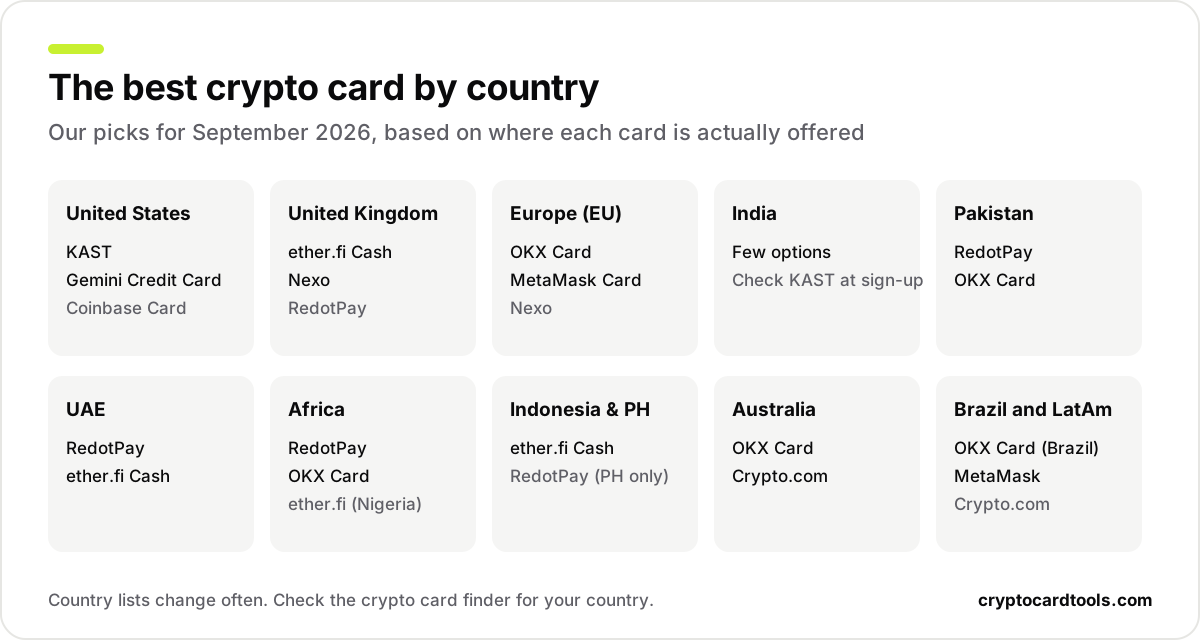
- United States: KAST for stablecoin cashback, the Gemini Credit Card for credit users, and the Coinbase Card for Coinbase holders. ether.fi Cash covers 31 states.
- United Kingdom: ether.fi Cash for rewards, Nexo for spending against crypto, and RedotPay for cash withdrawals. MetaMask and OKX aren’t taking new UK users.
- Europe (EU): OKX Card for the lowest fees and MetaMask Card for self-custody. Nexo suits people who want to borrow instead of sell. The details are in our guide to the best crypto card in Europe.
- India: Options are thin. RedotPay stopped issuing cards to Indian residents in September 2026, and MetaMask, OKX and ether.fi don’t cover India. KAST confirms eligibility only in its sign-up flow, so it is worth checking there.
- Pakistan: RedotPay and the OKX Card, which launched in Pakistan in August 2026.
- UAE: RedotPay for reach and cash, ether.fi Cash for rewards.
- Nigeria, Ghana and South Africa: RedotPay, the OKX Card and ether.fi Cash (Nigeria).
- Indonesia and the Philippines: ether.fi Cash, which publishes its full list of eligible countries. RedotPay no longer issues cards in Indonesia but still covers the Philippines.
- Australia: OKX Card (virtual) and Crypto.com.
- Brazil and Latin America: OKX Card in Brazil, MetaMask Card across 11 Latin American countries, and Crypto.com.
Country lists change often. Our crypto card finder filters every card by the country you live in.
Cards I Removed From This List
Wirex was my pick for Europeans in 2025. On June 30, 2026, Wirex ended crypto services on its classic app in the EEA, the UK and Australia. It asked users to move to its new Wirex One app.
BitPay was my pick for US users. The BitPay Card program ended in June 2023 after its banking partner, Metropolitan Commercial Bank, left crypto. BitPay hasn’t launched a replacement card since.
Both removals show why a crypto card list needs regular checks. A card that was right last year can disappear with a single email to cardholders.
Understanding the KYC system for Cryptocurrency Cards
If you are looking for a good crypto card, you need to understand the KYC mechanism. Different cards require different levels of personal information:
- No KYC: None. Highly risky and since Visa and Mastercard are regulated companies, it is practically not possible to have a no-KYC crypto card, as we covered in this post on no-KYC crypto debit cards.
- Standard KYC: Government-issued ID and a selfie or face scan. Examples: RedotPay, KAST and MetaMask.
- Full KYC with extra checks: ID, selfie and proof of address, sometimes with a credit check. Examples: OKX, Crypto.com, Nexo and the Gemini Credit Card.
Every card on this list requires identity verification. The difference is how much paperwork and how long approval takes. Our guide on how a crypto debit card works explains what happens to your data and funds after approval.
Why this matters: More verification exposes you to privacy risks but often gives higher spending limits. Also, you get better security of your assets.
Custodial vs Self-Custody Crypto Cards
Custody decides what happens to your money if something goes wrong.
With a custodial card, such as RedotPay, KAST, Crypto.com or Nexo, the company holds your balance. A compliance review can freeze it, and an insolvency could lock it.
With a self-custody card, such as MetaMask, ether.fi Cash or the European OKX Card, your funds stay in your own wallet until you pay. The card can still be suspended, but a lost seed phrase or a careless spending approval is your problem alone.
Neither model is safe by default. Keeping only spending money on any card limits the damage in both cases. Our card safety check scores each card on custody, licensing and incident history.
How Crypto Card Rewards Actually Work

Most cryptocurrency cards offer two types of rewards:
- Real Cashback: Paid in stablecoin or fiat currency. Usable instantly. Examples: KAST (USD), OKX (USDG), MetaMask (mUSD).
- Token-Based Rewards: Paid in native tokens (CRO, NEXO, ETHFI). Subject to price volatility.
A 3% reward paid in a token that falls 30% is worth about 2% by the time you use it.
In many jurisdictions, card rewards are taxable as income.
If rewards are token-based, their fair market value at issuance date is what’s taxable. Always check your local tax laws. The IRS digital assets page and HMRC’s Cryptoassets Manual set out the US and UK rules. Our crypto card tax guide covers the US, UK, Germany and Portugal.
Real User Experiences and Warnings
- Crypto.com Slashes Rewards (2022): A wave of backlash came when CRO rewards dropped overnight. Proof that terms can change fast.
- Wirex Ends Classic Crypto Services (2026): Classic app users in the EEA, the UK and Australia lost crypto transfers and earnings features on June 30, 2026.
- RedotPay Pulls Out of Big Markets (2026): Card issuance ended in India, Indonesia and Turkey, and new Korean cards stopped in September 2026.
- MetaMask Pauses Sign-Ups (2026): New US and UK applications have been paused since mid-2026, and Metal card orders since June 2.
- Account Freezes: Custodial card users regularly report balances locked for days or weeks during compliance reviews.
I would suggest to always maintain backup cards.
Don’t keep large balances on any crypto card provider. Our guide to crypto debit card risks covers the checks worth running before you top up.
Final Verdict: Choose Based on Use Case, Not Hype
After extensive testing and a full re-check in 2026, here’s my recommendation for choosing the right crypto card:
- Want simple cashback almost anywhere, including the US? → KAST
- Want the highest cashback and happy with self-custody? → ether.fi Cash
- Live in Europe and want the lowest fees? → OKX Card
- Want self-custody in Europe or Latin America? → MetaMask Card
- Need global access, high limits or cash withdrawals? → RedotPay
- Want maximum rewards and already stake CRO? → Crypto.com
- Want to spend without selling your crypto? → Nexo
- Live in the U.S. and want a crypto rewards credit card? → Gemini Credit Card
- Live in the U.S. and already use Coinbase? → Coinbase Card
The best crypto card for you depends entirely on your specific needs and geographic availability. I recommend weighing custody and the real cost at your own spending level, not the headline cashback.
While the industry is changing fast, these options represent the top options in the crypto card market as of September 2026. You can compare any two of them side by side on our crypto card comparison page.
What Changed in This Update (September 2026)
- Added KAST, ether.fi Cash, OKX Card, MetaMask Card, Gemini Credit Card and Coinbase Card
- Removed Wirex (classic app crypto services ended in the EEA, UK and Australia) and BitPay (card discontinued)
- Moved RedotPay from Best Overall to Best for Global Access, and corrected its cashback and KYC details
- Corrected Crypto.com staking amounts, FX fees and tier rules
- Updated Nexo’s cashback conditions, FX fees and availability
- Added a real-cost comparison, picks by country and a custody section
- Added how crypto cards work (debit, credit and prepaid) and notes on Bybit, Coinbase One and Uphold
Frequently asked questions
What is the best crypto card in 2026?
What is the best crypto card in India?
What is the best crypto card in the USA?
What is the best crypto card in Europe?
Is there a crypto card without KYC?
Which crypto card is best for ATM withdrawals?
Are crypto cards legal worldwide?
How do crypto cards handle taxes?
Can I use crypto cards for business expenses?
What happens if a crypto card provider goes bankrupt?
Which cryptocurrencies can I spend with these cards?
Sources
Related tools
Keep reading
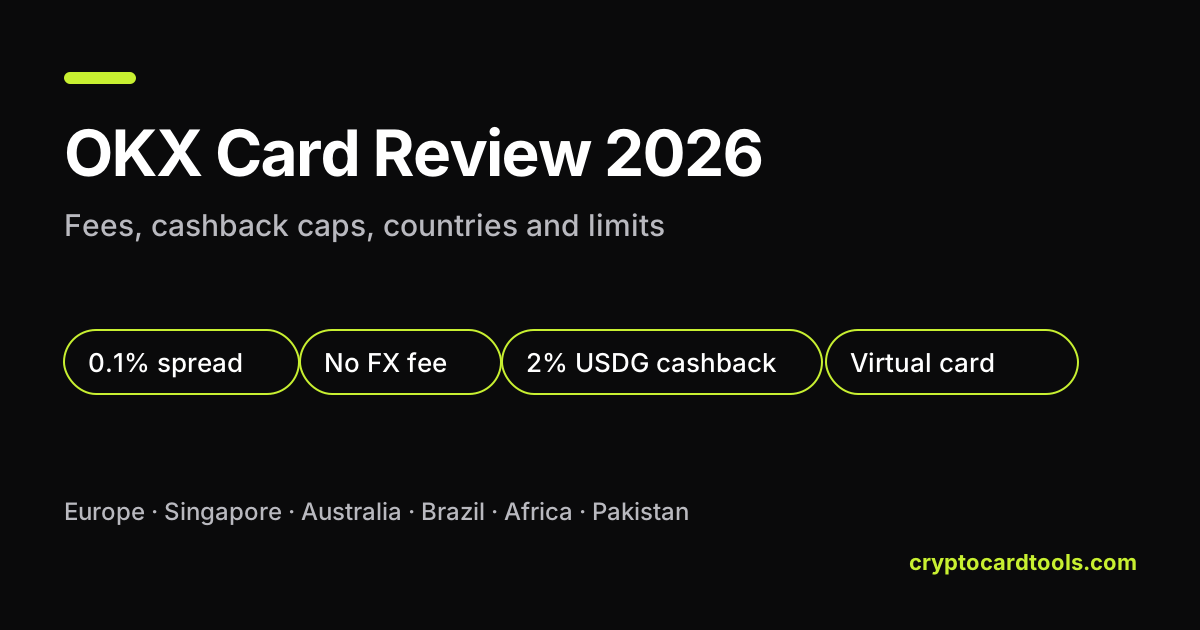
OKX Card Review 2026: Fees, Cashback, Countries and Limits
OKX Card review for 2026: 0.1% spread, 2% to 10% USDG cashback and its real monthly caps, every country it works in, and who should skip it.
Bybit Card Review 2026: Fees, Cashback, and Availability
Read our Bybit Card review for 2026. See cashback tiers, fees, and the countries where it's actually available. Get the facts before you apply.
Binance Card Review 2026: Fees, Cashback and the Countries That Can Still Get It
Binance Card review for 2026: 0.9% conversion and 2% to 3% FX fees, 1.5% to 3% cashback capped at $100, where it works, and who should skip it.