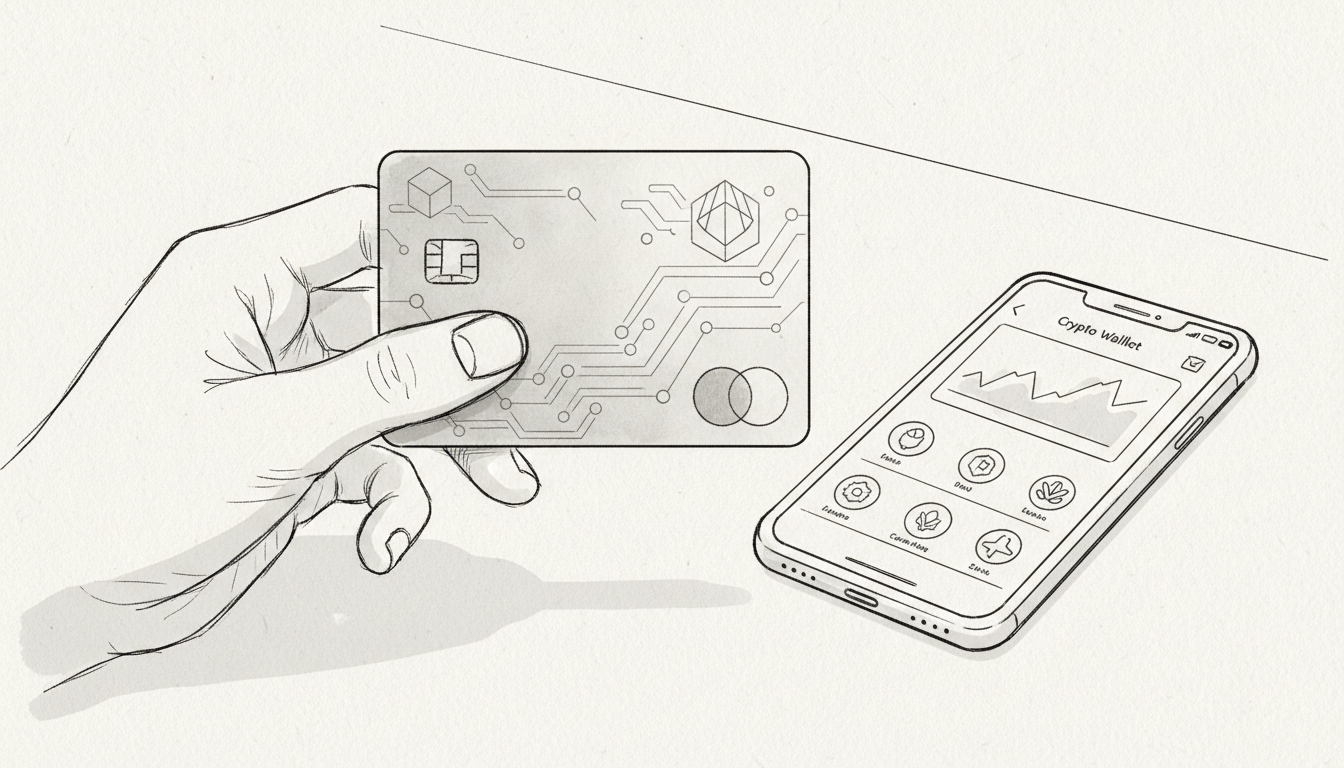
Honest RedotPay Card Review 2026: Fees, Limits, Countries and Risks

Contents
- What is RedotPay?
- RedotPay Card Review: Virtual and Physical Cards
- RedotPay Sign-Up Review: Surprisingly Smooth (With One Major Catch)
- RedotPay Fee Structure Experience
- RedotPay Spending and ATM Limits
- RedotPay Pro: Is the 3% Cashback Worth It?
- Real-World Test
- Beyond the Card: Send to Bank, P2P, Swap, Credit and Earn
- Apple Pay and Google Pay
- Mobile App Review: Function Over Flash
- Customer Support: A Mixed Bag of Responses
- RedotPay vs. Major Competitors
- Security Analysis: Solid Fundamentals, Real Freeze Risk
- Tax and Record-Keeping
- Pros and Cons: The Unvarnished Truth
- Who Should Get the RedotPay Card?
- Final Verdict
- The Bottom Line: Is RedotPay Worth It in 2026?
- What Changed in This Update (September 2026)
Some links in this article are affiliate links. We may earn a commission if you sign up through them, at no extra cost to you. How we handle affiliate links.
Not all crypto cards are the same.
If you’re tired of keeping your crypto locked away in digital wallets while real-world expenses pile up, you’re not alone. I am going to share my personal RedotPay card review after using it for months.
The RedotPay card promises to bridge this gap… but does it deliver?

I’ve spent three months putting the RedotPay card through its paces – from grocery shopping to spontaneous weekend trips. I’ve tested its limits, scrutinized its fees, and compared it against every major competitor in the market.
That testing happened in 2025. In September 2026, I re-checked every fee, limit and country rule in this review against RedotPay’s official help center, because several of them have changed since.
And I am writing this brutally honest review so you can know whether the RedotPay card deserves a place in your wallet.
TL;DR: The RedotPay card offers a no-contract prepaid card for just $10. KYC is quick, and it is one of the best options in the market right now that does not require any bank account.
You pay no monthly or annual fee. Spending costs a 1% crypto conversion fee, plus 1.2% when you pay in a currency other than your card’s.
There is no cashback on the standard card, but the optional RedotPay Pro membership adds 3% on Apple Pay and Google Pay purchases, capped at 18 USDs a month.
The catch is geography. Residents of the US, India, Indonesia, Turkey and more than 40 other countries and regions can’t get a card.
For everyday spenders who primarily hold USDT, USDC, BTC or ETH and live in a supported country, it’s recommended.
Quick Note: Some links on this page are my affiliate links. That means I might get a small commission if you sign up through them. In exchange, you will get a discounted sign-up price. It is completely optional, and there is no extra cost to you. But I will appreciate it if you use them, as it supports me to run this website and share honest experience.
What is RedotPay?
RedotPay is a fairly new card provider to the crypto world.
It launched in 2023, and this Hong Kong-based platform has quickly built a comprehensive ecosystem that extends beyond just card services.
Unlike fly-by-night operations that have plagued crypto, RedotPay holds real licences and registrations:
- Hong Kong: a Money Service Operator (MSO) licensee, acquired in June 2024, plus Money Lender and Trust or Company Service Provider (TCSP) licences
- United States: FinCEN Money Services Business (MSB) registration, which covers internal and cross-border operations only, not US customers
- Canada: FINTRAC Money Services Business registration
- Argentina: Virtual Asset Service Provider (VASP) licence from the CNV
It provides a crucial layer of legitimacy.
The scale has grown fast too. RedotPay says it serves more than 8 million users in over 100 countries, with $12 billion in annualized payment volume.
In 2025 it raised $194 million, including a $107 million Series B led by Goodwater Capital. Coinbase Ventures, Lightspeed, Accel and Galaxy are among its backers.
RedotPay primarily targets emerging markets where traditional banking access is limited.
This explains why it has gained significant traction across Asia, Latin America, Africa and the Middle East, despite fierce competition from bigger names like Crypto.com and Binance. We have covered all of them in the updated best crypto card list.
RedotPay Card Review: Virtual and Physical Cards
Unlike competitors that bombard you with confusing tiered systems, RedotPay takes a refreshingly straightforward approach with just two card options:
Standard Card (Virtual Only)
- Issuance Fee: $10 (Special Offer)
- Monthly Fee: None
- Cashback Rate: None (3% on Apple Pay and Google Pay with RedotPay Pro)
- Spending Limit: $100,000 per transaction, $1,000,000 per day
- ATM Withdrawals: Not available
- Special Features: Ready in the app minutes after approval, works online and through Apple Pay or Google Pay
Physical Card (Physical + Virtual)
- Issuance Fee: $100 (one-time)
- Monthly Fee: None
- Spending Limit: $100,000 per transaction, $1,000,000 per day
- ATM Withdrawal Limit: 3 withdrawals a day and 30 a month. On the USD card, that is up to $3,750 a day and $50,000 a month.
- Delivery: Standard mail is free. DHL Express costs extra and depends on your country.
- Special Features: Chip and PIN, contactless payments and ATM access
Both cards are valid for three years. Each account can hold up to five virtual and physical cards over its lifetime, and deleting a card does not give you the slot back.
I found this approach incredibly refreshing in a market where companies like Crypto.com push users through several card tiers with staking or subscription requirements.
The lack of monthly fees is also a massive advantage over cards that charge a monthly subscription for basic services.
RedotPay doesn’t require any token staking to qualify for either card. The optional RedotPay Pro membership, launched in June 2026, is the only paid add-on, and I cover whether it’s worth it below.
The supported cryptocurrencies for spending include:
- Tether (USDT)
- USD Coin (USDC)
- Bitcoin (BTC)
- Ethereum (ETH)
- BNB, Solana (SOL), TRON (TRX), XRP, SUI and Sonic (S)
- Bitcoin Cash (BCH) and Litecoin (LTC), added in July 2026
When I first tested the card, the list stopped at four assets. It’s now much wider, although Binance and a few other exchange cards still let you spend more coins.
If you’re heavily invested in smaller altcoins, check the in-app list before you pay the issuance fee.
RedotPay Sign-Up Review: Surprisingly Smooth (With One Major Catch)
Registering for RedotPay is straightforward—until it isn’t.
The initial process takes less than 5 minutes through their mobile app (available on iOS and Android).
You’ll provide:
- Email and phone verification
- Basic personal information
- Government ID upload
- Selfie verification (face scan)
RedotPay doesn’t ask for proof of address, which makes it one of the lighter KYC processes among mainstream cards. It still isn’t a no-KYC card, and our guide to no-KYC crypto debit cards explains why those carry more risk.
Basic verification usually completes within hours, and the virtual card activates within minutes of approval and funding. A physical card, however, takes about 10 to 15 days to produce, and shipping adds more time depending on your country.
The major catch is where you live. RedotPay keeps separate lists for registration, card issuance and card delivery. You can pass KYC and still be told you can’t get a card.
Countries Where You Can’t Get a RedotPay Card (September 2026)
RedotPay’s official card issuance list says residents of these countries and regions are ineligible for both virtual and physical cards:
Afghanistan, Albania, Belarus, Bosnia and Herzegovina, Bouvet Island, Burkina Faso, Burundi, Central African Republic, Croatia, Cuba, Democratic Republic of the Congo, Eritrea, Ethiopia, Guinea-Bissau, Haiti, India, Indonesia, Iran, Iraq, Kosovo, Lebanon, Liberia, Libya, Mainland China, Mali, Montenegro, Morocco, Myanmar, Nepal, Netherlands Antilles, Nicaragua, North Korea, North Macedonia, Russia, Serbia, Singapore, Slovenia, Somalia, South Sudan, Sudan, Syria, Turkey, Ukraine, United States, Venezuela, Yemen and Zimbabwe.
India, Indonesia, Turkey, Morocco and Nepal are the newest additions. Many older reviews still list them as supported.
South Korea is not on the list, but RedotPay stopped issuing new cards to Korean users in September 2026.
This limitation isn’t prominently displayed on their website, causing frustration for many prospective users. Promo codes don’t override it either.
If you’re based in the US, you’ll need to look elsewhere—possibly toward the Coinbase Card or the Krak Card, which both accept US residents. Our crypto card finder filters cards by the country you live in.
RedotPay Fee Structure Experience
Let’s get straight to what everyone cares about—fees.
This is where crypto cards often hide their true cost, and RedotPay is no exception.
RedotPay’s current fee schedule took effect on December 1, 2025. Everything below comes from it unless I say otherwise.
The Good: What Won’t Cost You
- Monthly/Annual Maintenance: None (genuinely impressive)
- Inactivity Fees: None
- Default-Currency Transactions: No fee when you pay in your card’s own currency
- Crypto Deposits: Free on RedotPay’s side. You still pay the blockchain’s network fee.
- Balance Limit: Unlimited
- Standard Mailing of the Physical Card: Free
The Bad: Hidden Costs to Watch For
- Card Issuance: $10 for virtual, $100 one-time for physical. Both are non-refundable.
- Cryptocurrency Conversion Fee: 1% (taken during the exchange from crypto to fiat)
- Foreign Transaction Fee: 1.2% when you pay in a currency other than your card’s default currency
- ATM Withdrawal Fee: 2% on the HKD card. On the USD card, 2% up to $10,000 a month and 3% above that.
- Small Transactions ($1 or less): The first 5 per card each month are free, then $0.20 each
- Declined Transactions: The first 3 per card each month are free, then $0.50 each
- Virtual Card Replacement: $5 the first time, $10 after that
RedotPay’s help pages list a few more charges:
- Chargebacks: $50 per request, and a resolution takes 3 to 6 months.
- Merchant categories: some, such as ad platforms and game top-ups, carry a 1.5% fee (minimum $0.50) after three free uses a month.
- Top-ups: funding by credit card or PayPal costs 3%, Binance Pay costs 1%, and EUR or GBP bank transfers are free.
These fees paint a clear picture of who benefits most from RedotPay: users who spend in their card’s currency and top up with stablecoins on-chain.
The 1.2% foreign transaction fee is lower than the 2% Crypto.com charges on its entry card in Europe and the 2% on the Binance Card.
Let’s be brutally honest—if you’re a frequent international traveler, this fee structure alone might be enough reason to look elsewhere. But if you don’t want to lock your tokens for a long period or you need a simple card, this is a good choice.
What a $500 Payment Actually Costs
Using the official schedule, a $500 spend from a crypto balance works out like this:
- In your card’s currency: the 1% conversion fee makes it $5.
- In a foreign currency: 1% plus 1.2% makes it about $11, or 2.2%.
- As cash from a foreign ATM on the USD card: 2% ATM, 1% conversion and 1.2% FX come to about $21, or 4.2%, before the ATM operator’s own fee.
- Topped up by credit card first: add $15 (3%) before you spend anything.
You can run your own numbers in our card cost calculator, which compares RedotPay with up to three other cards at your monthly spend.
At an ATM, always decline the machine’s offer to convert the currency for you (dynamic currency conversion). Its rate is usually worse than your card’s.
RedotPay Spending and ATM Limits
RedotPay’s headline limits are some of the highest in the market. Both the HKD and USD card programs allow $100,000 per transaction and $1,000,000 per day.
You can set lower limits for each card in the app. A security event, such as a password reset, temporarily caps spending at $1,000 for 24 hours.
ATM limits depend on which card version you hold:
- HKD card: 3 withdrawals a day, 30 a month, up to HK$23,000 a day and HK$75,000 a month
- USD card: 3 withdrawals a day, 30 a month, up to $3,750 a day and $50,000 a month
- USD card in some countries: $3,000 a day and $10,000 a month
RedotPay Pro: Is the 3% Cashback Worth It?
RedotPay Pro is an optional membership that launched in June 2026. It costs $12.90 a month or $129 a year.
Members get 3% cashback on Apple Pay and Google Pay purchases. The cashback is capped at 18 USDs a month, paid as RedotPay’s own reward stablecoin, and it expires after 30 days if you don’t spend it.
The plans also bundle other perks:
- Monthly plan: the $10 virtual card fee is waived.
- Annual plan: you get a voucher for a free physical card ($100 value) and free RedotPay ATM fees on up to $1,000 a month. You also get an extra 1% APY on RedotPay Earn balances, on the first $1 million.
The math is simple. You hit the 18 USDs cap at $600 of monthly Apple Pay or Google Pay spending.
The monthly plan pays for itself only if you spend at least $430 a month through a mobile wallet. Below that, Pro costs more than it returns, unless you value the waived card fee.
Card spending that doesn’t go through Apple Pay or Google Pay earns no cashback, even with Pro.
RedotPay Points: prize draws, not cash
Every card payment also earns RedotPay Points, with or without Pro. You collect more by referring friends and completing missions in the app.
Points only buy tickets for RedotPay’s prize draws, with prizes such as the latest iPhone or a PS5. RedotPay picks winners from an Ethereum block hash once all tickets for a prize are taken.
Points can’t be cashed out, transferred or traded, and they expire 12 months after you earn them. Treat them as a free lottery ticket rather than part of the card’s value, which is how our cost figures handle them.
Real-World Test
Theoretical features mean nothing if a card doesn’t work when you need it. I tested the RedotPay Visa card extensively across multiple scenarios:
Retail Transactions (4.5/5)
The card works flawlessly for in-person retail purchases.
I tested it at supermarkets, restaurants, gas stations, and department stores with a 98% success rate. The only failures occurred at terminals that were already known to have issues with Visa cards generally.
Transaction settlement is impressively fast—purchases reflect in the app within seconds, not minutes or hours as with some competitors.
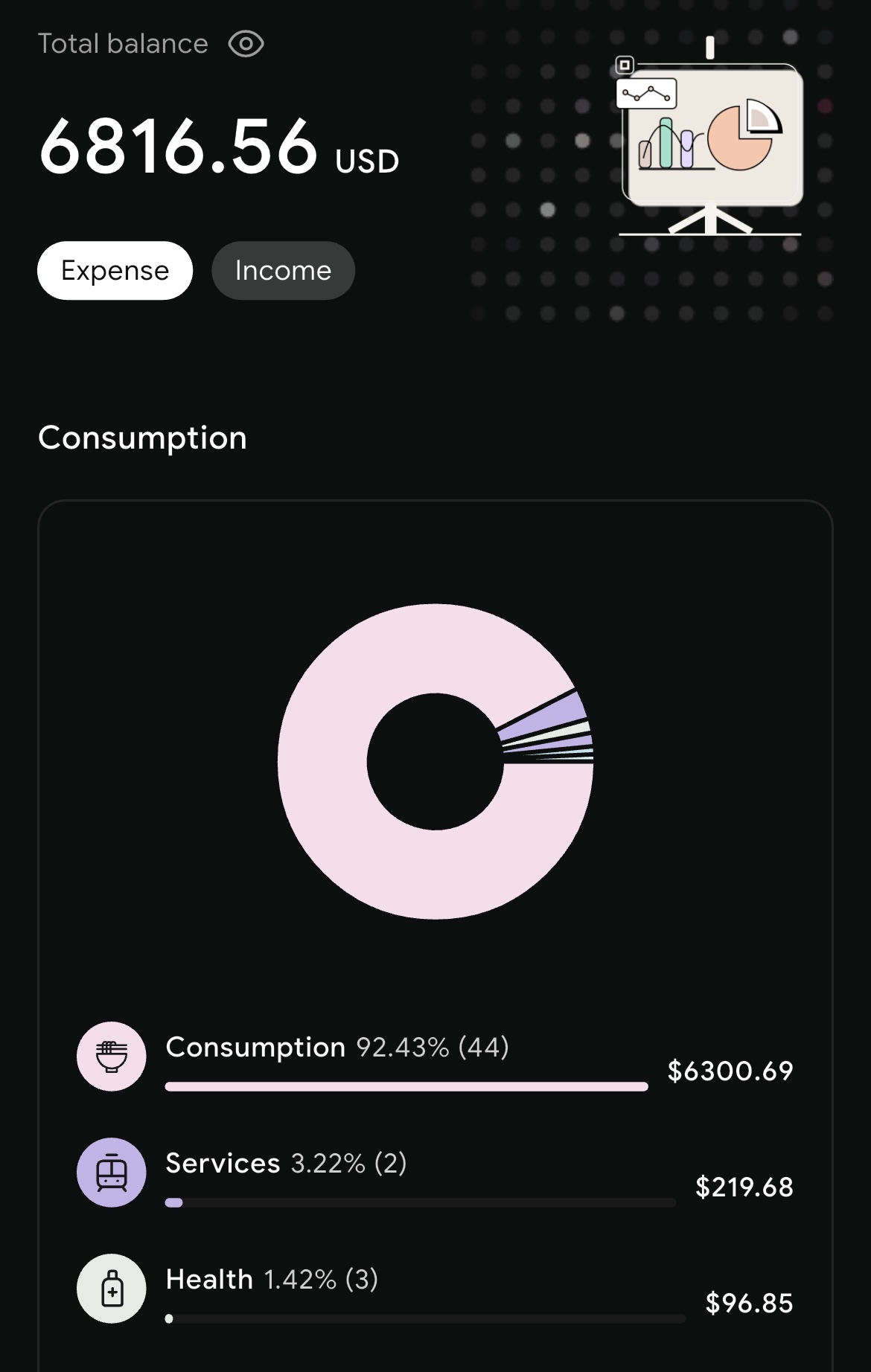
Online Purchases (3.5/5)
Most major e-commerce platforms accept the card without issues.
However, I encountered problems with several subscription services that employ strict card verification systems. Netflix and Spotify both worked seamlessly.
I couldn’t get it to work on some websites that have country-specific card limitations. So it is as good as any other international bank card.
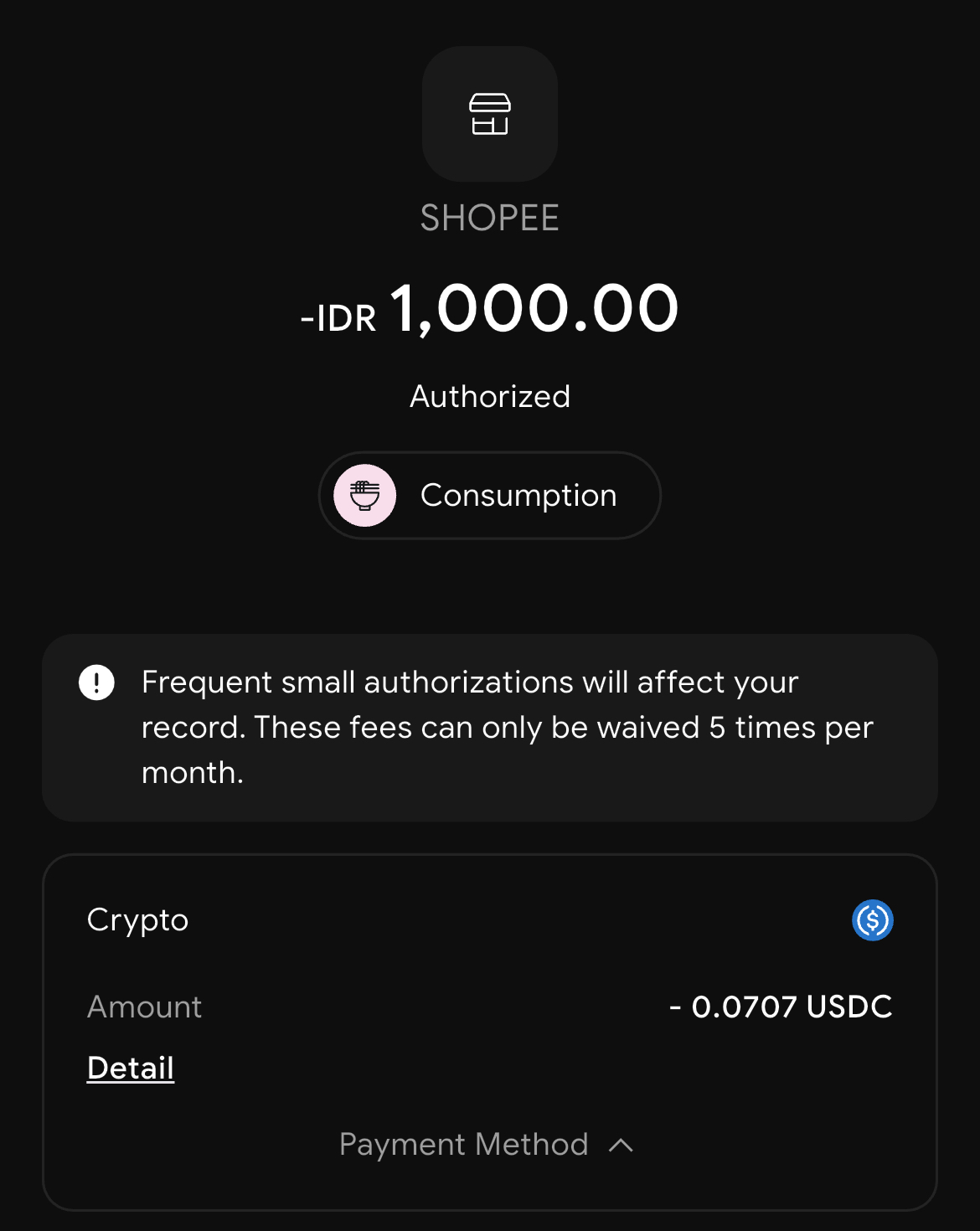
Additionally, some services that perform micro-authorization checks (temporary small charges to verify the card) worked seamlessly with RedotPay. Keep in mind that RedotPay now charges $0.20 for each small authorization after the first five in a month.
I have added some screenshots from my testing for reference.

International Usage (3/5)
The card functionally works across borders.
I tested payments in several countries with generally positive results.
Sometimes it does get rejected (rarely) on the first attempt but works on the second…
This isn’t uncommon with crypto cards, but it creates awkward moments when paying at restaurants or shops. It also matters more now, because each decline after the third in a month costs $0.50.
ATM Withdrawals (4/5)
ATM access works reliably, with successful withdrawals from various bank networks.
The fee is clearly displayed before completing the transaction, which I appreciate for transparency. The USD card’s daily ATM limit of $3,750 is generous compared to many competitors.
Remember that ATM withdrawals need the physical card. The virtual card can’t be used at an ATM.
Hidden Strengths and Weaknesses
What surprised me most during testing was the card’s performance at merchants traditionally hostile to crypto.
In my testing, RedotPay didn’t get flagged as a “crypto card” at most payment processors, so it worked at merchants that had blocked other crypto cards.
The most significant weakness in daily use was the limited cryptocurrency selection at the time. RedotPay has since added BNB, SOL, TRX, XRP, SUI, BCH, LTC and others, so this matters much less now.
Beyond the Card: Send to Bank, P2P, Swap, Credit and Earn
RedotPay is no longer just a card. The app now works as a full stablecoin payments app, and for some users these features matter more than the card itself.
Send to bank and e-wallet. You can convert crypto into local currency and send it to a bank account or e-wallet. The app shows the fee, the amount received and the estimated arrival time before you confirm.
This is useful for paying family abroad or moving money to your own bank without a separate exchange.
P2P marketplace. RedotPay runs its own P2P market, and says it covers 50+ local currencies and 200+ payment methods. It’s another route to cash out stablecoins. Our guide to the best crypto offramps covers bank withdrawals and P2P in more depth.
Swap. You can swap between supported assets inside the app before spending or sending.
RedotPay Credit. Credit lets you borrow against crypto such as BTC or ETH instead of selling it. Interest is 0.05% of the principal per day, which works out to roughly 18% a year if you never repay.
Interest starts on the day of the transaction, and your collateral stays locked until you repay. If the collateral’s price falls, it can be restricted or liquidated.
RedotPay Earn. Earn pays a variable yield on USDT and USDC, with a $100 minimum, in selected regions. The card can spend from Earn balances directly. RedotPay states that capital can be at risk, and Earn is not a bank deposit.
Apple Pay and Google Pay
Google Pay works with RedotPay cards in eligible regions.
Apple Pay has a more complicated history. On August 22, 2025, after Apple reviewed Hong Kong card programs, RedotPay had to stop adding new cards to Apple Pay.
RedotPay now offers a free card upgrade that restores Apple Pay. It rolls out gradually, and eligible users get a notification in the app.
The upgrade gives you a new card number, CVV and a fresh three-year expiry date. You need app version 3.0.1 or later, then you tap Card and Upgrade.
After upgrading, update your card details on every subscription and shopping site. The old number stops working for new payments.
If RedotPay won’t add to Apple Wallet, it’s usually an old card that still needs the upgrade. Apple Pay also needs to be supported in your device’s region.
Mobile App Review: Function Over Flash
The RedotPay mobile app serves as the control center for your card, and it prioritizes functionality over aesthetic appeal. Here’s the breakdown:
Strengths:
- Real-time notifications for all transactions
- Intuitive fund management between crypto wallets and card balance
- Instant freeze/unfreeze capability for security
- Detailed transaction history with merchant information
- Customizable spending limits adjustable on-the-fly
- Card, wallet, transfers, swaps and P2P in one place
Weaknesses:
- Limited customization options for notification preferences
- Forever dark mode (no theme selection)
- No CSV export of transactions, which makes tax records harder
The app holds a 4.6 out of 5 rating from more than 75,000 reviews on Google Play, and it has passed 5 million downloads there.
The security features deserve special mention—the app includes optional 2FA for all sensitive actions, biometric authentication options, and session timeout controls that exceed industry standards.
Customer Support: A Mixed Bag of Responses
Customer support can make or break a financial product. RedotPay offers three primary support channels:
- In-app chat support: Now available, starting with an AI assistant before a human agent
- Email support: Advertised 24-hour response time. Works well for simple issues.
- Knowledge base with FAQs and guides: Much improved, with separate pages for fees, country restrictions and Apple Pay
Physical cardholders did receive priority support during my testing, with noticeably faster response times. However, the quality of resolution didn’t significantly differ between card types.
Complex cases are where support struggles. Users with frozen accounts or disputed refunds report weeks of back-and-forth, and chargebacks take 3 to 6 months to resolve.
RedotPay vs. Major Competitors
To truly understand RedotPay’s position in the market, we need direct comparisons with major competitors:
RedotPay vs. Crypto.com Card
- Cost: RedotPay wins if you won’t lock tokens. Crypto.com’s free prepaid tier pays 0% cashback, and higher tiers need a 12-month CRO lockup.
- Supported Cryptocurrencies: Crypto.com wins with a far larger list.
- International Fees: RedotPay wins at lower tiers. Crypto.com’s entry Midnight card in Europe charges 2% on non-EUR spending outside the EU and UK, against RedotPay’s 1.2%.
- Perks: Crypto.com wins once you stake, although it removed several metal-tier rebates in November 2025.
- Accessibility: It depends where you live. Crypto.com covers the US (except New York), UK and most of Europe. RedotPay covers much of Asia, Latin America, Africa and the Middle East.
See the full RedotPay vs Crypto.com comparison for yearly costs at three spending levels.
RedotPay vs. Binance Card
- Cost: Binance wins. It has no issuance fee and charges a 0.9% conversion fee (0.1% for USDC).
- Supported Cryptocurrencies: Roughly a tie. Binance supports 10 assets and RedotPay about a dozen.
- Fee Structure: RedotPay wins abroad with a 1.2% FX fee against Binance’s 2%. Binance wins at ATMs with two free withdrawals a month.
- User Experience: RedotPay wins with simpler, more intuitive processes.
- Availability: RedotPay wins. The Binance Card is offered in about nine countries, including Australia, Mexico and Brazil, and not in India, the EU, the UK or the US.
The RedotPay vs Binance Card comparison puts both cards side by side.
RedotPay vs. KAST Card
- Cost: KAST wins. Its first two virtual cards are free, against RedotPay’s $10.
- Rewards: KAST wins with 1.5% cashback on the first $2,000 a month on its free tier. RedotPay pays nothing without Pro.
- International Fees: Close. KAST charges 0.5% to 1.75% depending on the transaction, and RedotPay charges 1% plus 1.2%.
- Cash Withdrawals: RedotPay wins. KAST charges $3 plus 2% and caps each withdrawal at $250.
- Assets: RedotPay wins for BTC and ETH holders. KAST is stablecoin-first and charges 2% to 5% to auto-convert volatile crypto.
- Availability: KAST says it is available in 170+ countries, including the US, and shows the supported list in its app.
More detail is in the RedotPay vs KAST comparison and the KAST card fees page.
These comparisons reveal RedotPay’s true position: It excels in straightforward payment without complex requirements and has the highest limits in this group. It falls short on rewards and on availability in the US, India and Indonesia.
If you live in Europe, my OKX Card review covers a card with a 0.1% spread and no FX fee, though it has no physical card or ATM access.
We also compare it head to head in RedotPay vs Bybit Card, and our Bybit Card review covers that card in depth. The crypto card comparison ranks every card we track.
Security Analysis: Solid Fundamentals, Real Freeze Risk
Security should be non-negotiable for any financial product. RedotPay implements several industry-standard security measures:
- Multi-factor authentication for all account actions
- Custody on Fireblocks’ institutional MPC (multi-party computation) infrastructure
- A separate blockchain deposit address for each user, which keeps card funds apart from the platform wallet
- Identity checks by Sumsub and transaction monitoring by Beosin
- ISO/IEC 27001, PCI DSS and SOC 2 Type II certifications, according to RedotPay
What’s notably missing is a public bug bounty program – something that competitors like Crypto.com and Binance run. I could not find one for RedotPay.
RedotPay also doesn’t disclose which bank issues its cards or sponsors its BIN, and your balance is not covered by any deposit insurance.
I could not find any reported breach of RedotPay’s systems, which is commendable. With more than 8 million users, though, it is now a large enough target that this record matters.
The most significant security advantage RedotPay offers is its simplified card setup.
With fewer moving parts than multi-service platforms, there are inherently fewer attack vectors. That advantage shrinks as RedotPay adds Credit, Earn and P2P to the same app.
Account Freezes and Complaints
The biggest real-world risk isn’t hacking. It is your own account being frozen during a compliance review.
The pattern in negative reviews is consistent. Larger deposits or unusual transfers trigger a review, and the user then spends days or weeks sending documents while funds stay locked.
Trustpilot rated RedotPay “Poor” at 2.6 out of 5 in September 2026. The reviews split sharply: many are five-star, while the one-star reviews focus on freezes and slow support.
Because RedotPay is custodial, you can’t withdraw on your own while an account is under review. Keep only what you plan to spend on the card, and hold larger savings elsewhere.
Our card safety check scores RedotPay on licensing, custody, fund segregation, reserves and incident history. Our guide to crypto debit card risks covers the wider checks.
Tax and Record-Keeping
Spending crypto with a card can count as selling it in many countries, which means a possible capital gains event on every purchase. Spending stablecoins keeps those gains close to zero.
RedotPay provides billing statements and monthly card history, but no CSV export or cost-basis tracking. You’ll need to log the asset spent, its value and the date yourself.
The $5 USDs welcome reward, referral commissions and Pro cashback may also count as income where you live. Our crypto card tax guide explains the rules for the US, UK, Germany and Portugal.
Pros and Cons: The Unvarnished Truth
After months of testing and a full re-check in 2026, here’s my balanced assessment of RedotPay’s strengths and weaknesses:
Pros:
- No monthly or annual fees, which keeps long-term costs predictable
- No staking or subscription needed for either card
- Simple two-card system avoids unnecessary complexity
- Very high limits: $100,000 per transaction and $1,000,000 a day
- Strong transaction acceptance in my testing
- Rapid transaction notifications provide real-time spending awareness
- Quick to start, with a virtual card minutes after approval
- Bank and e-wallet transfers, P2P and swaps in the same app
Cons:
- 1% conversion fee on spending, plus 1.2% in foreign currencies
- No cashback without the paid Pro membership
- Non-refundable $10 and $100 card fees
- ATM withdrawals cost 2% to 3% and need the physical card
- Not available in the US, India, Indonesia, Turkey and 40+ other countries and regions
- Account freezes during compliance reviews, with slow resolution
- $50 per chargeback, taking 3 to 6 months
- Card-issuing bank not disclosed
Who Should Get the RedotPay Card?
After thorough testing and analysis, the ideal RedotPay user profile becomes clear:
I recommend it for crypto holders who primarily use stablecoins, BTC or ETH and want simple spending access. It will be a life saver for moderate spenders who benefit from simplicity and need high limits.
It also suits people who send money home, because the bank and e-wallet transfer feature sits next to the card.
However, it is not recommended if your country is on the card issuance restriction list. It is also not for users with a diverse portfolio of small altcoins, users seeking premium perks, or anyone who needs to keep large balances on the card.
Final Verdict
The value proposition is clear—RedotPay excels at simplicity and no-strings-attached spending.
In a market where competitors continuously add complex requirements and tiered systems, this straightforward approach is refreshing.
Since my first test, RedotPay has widened its asset list, launched Pro, and picked up licences in Argentina, Canada and the US. It has also pulled card issuance from India, Indonesia and Turkey, and stopped new cards in Korea.
It has the potential to become a market leader rather than just a solid contender. The freeze complaints and the undisclosed issuing bank are what keep it from that spot today.
The Bottom Line: Is RedotPay Worth It in 2026?
RedotPay offers a compelling package for specific users. If you live in a supported country, spend mostly in your card’s currency, and hold stablecoins or mainstream cryptocurrencies, it’s a strong contender that deserves a place in your wallet.
For international users or those seeking rewards, better options exist in the market. The 2.2% cost of foreign-currency spending and the lack of cashback without Pro are legitimate drawbacks that shouldn’t be overlooked.
What makes RedotPay stand out is its rejection of the industry trend toward ever-increasing complexity on the card itself.
In a market where competitors constantly move the goalposts with changing reward structures and requirements, RedotPay’s transparent, no-strings-attached card feels like a breath of fresh air.
As the crypto card market continues to evolve, RedotPay’s position as the “straightforward option” gives it a unique edge that more complicated competitors might find hard to match.
This review is regularly updated. Your experience may vary based on location, spending patterns, and future platform changes.
What Changed in This Update (September 2026)
- Fees updated to RedotPay’s schedule effective December 1, 2025: 1.2% FX (was 1%), 2% to 3% ATM (was 1%)
- Added the full card issuance restriction list, including India, Indonesia, Turkey, Morocco and Nepal
- Corrected spending and ATM limits
- Added RedotPay Pro, Credit, Earn, P2P and bank transfers
- Added the Apple Pay pause and card upgrade
- Replaced the Wirex comparison with KAST, after Wirex shut its crypto service in the EEA and Australia in June 2026
Frequently asked questions
Is RedotPay legit and safe?
Is RedotPay available in India?
How long does card activation take after approval?
Can I use RedotPay without completing full KYC verification?
What are RedotPay's fees?
What is the RedotPay daily limit?
What happens if I lose my physical RedotPay card?
Does RedotPay work with Apple Pay or Google Pay?
How do I withdraw money from RedotPay to my bank account?
What happens if my card is declined?
Can I use RedotPay at merchants that typically block crypto cards?
Does RedotPay give cashback or rewards?
Sources
- RedotPay Card Limitations & Fees
- RedotPay Card Issuance Restrictions
- Getting Started with RedotPay Pro
- How to Upgrade and Link Your Card to Apple Pay
- RedotPay's Response to the Apple Pay Service Adjustment
- About RedotPay
- RedotPay MSO Licensee Acquisition
- Fintech Futures: RedotPay Secures Licences in Argentina, Canada and the USA
- Seoul Economic Daily: RedotPay Halts New Signups in Korea
- RedotPay on Trustpilot
Related tools
Keep reading
OKX Card Review 2026: Fees, Cashback, Countries and Limits
OKX Card review for 2026: 0.1% spread, 2% to 10% USDG cashback and its real monthly caps, every country it works in, and who should skip it.
Cheapest Crypto Onramp in 2026: Cut Fees to 0.1%
Cheapest crypto onramp: bank transfers beat cards. Binance and Kraken Pro cost 0.1% to 0.80%, cards charge 3% to 5%. Compare all fees before buying.
Bybit Card Review 2026: Fees, Cashback, and Availability
Read our Bybit Card review for 2026. See cashback tiers, fees, and the countries where it's actually available. Get the facts before you apply.