Binance Card Review 2026: Fees, Cashback and the Countries That Can Still Get It
Contents
- What the Binance Card Is: Debit, Credit or Prepaid?
- Where the Binance Card Is Available in 2026
- Binance Card Fees
- Binance Card Cashback
- Binance Card Limits
- How to Get a Binance Card
- Using the Binance Card Day to Day
- Is the Binance Card Safe?
- Binance Card vs the Alternatives
- Common Binance Card Problems
- Pros and Cons
- Final Verdict: Is the Binance Card Worth It?
Some links in this article are affiliate links. We may earn a commission if you sign up through them, at no extra cost to you. How we handle affiliate links.
A card linked to your exchange account lets you spend crypto like cash. You skip the bank withdrawal, the wait and the fees along the way, and the crypto converts at the moment you pay.
Binance is the largest crypto exchange by trading volume, with hundreds of millions of registered users. For many of them, it is where most of their crypto lives, which makes its own card the obvious one to try.
You may remember the Binance Card as a Visa card across Europe with up to 8% cashback in BNB. Or you may have heard it only works in Brazil.
But neither picture matches the card in 2026. It is now a Mastercard sold through three separate programs, in a short list of countries, with cashback capped at $100 a month.
The fee you pay depends on where you live and which coin you spend. The same $500 purchase can cost you nothing or $14.50.
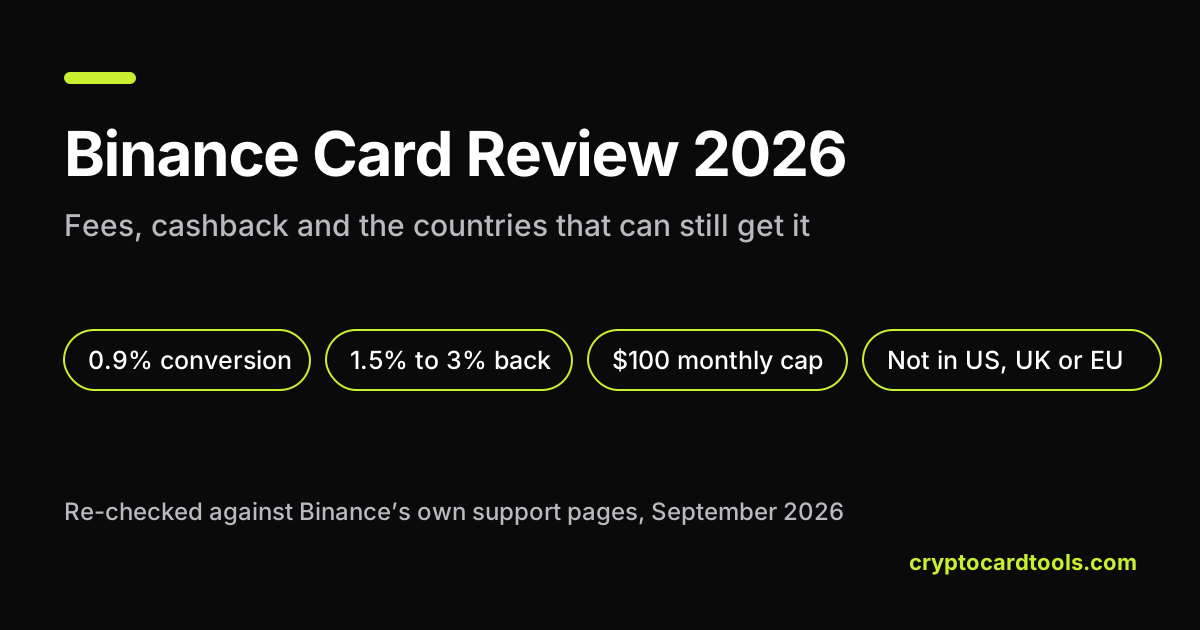
Quick answer: The Binance Card is a free debit-style Mastercard that spends crypto from your Binance account. Binance charges a 0.9% conversion fee (0.1% on USDC) and, in most countries, a 2% foreign exchange fee.
Cashback is 1.5% to 3%, capped at $100 a month. The card is offered in Australia, New Zealand, Mexico, Colombia, Peru, Armenia, Brazil, Argentina and some CIS countries.
It isn't available in the US, the UK, Canada or the EU. It suits people who already keep their savings on Binance and live in one of those countries.
What the Binance Card Is: Debit, Credit or Prepaid?
The Binance Card works like a debit card from your point of view. You hold crypto in your Binance account, you tap the card, and the matching amount leaves your balance.
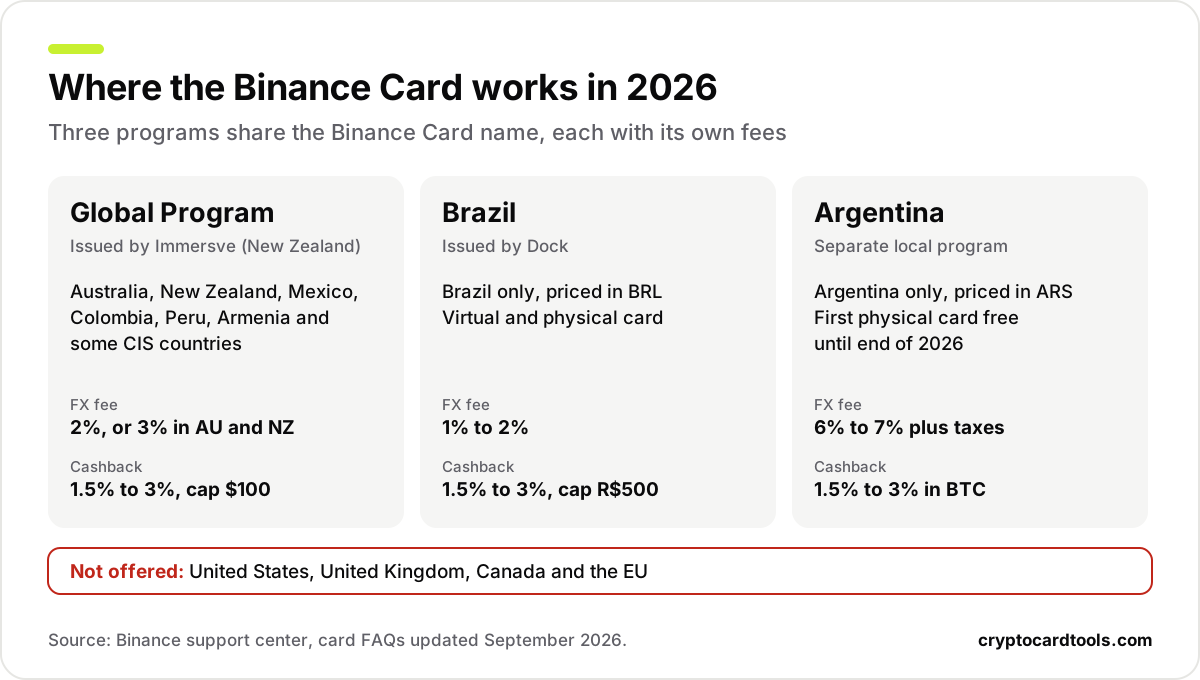
Behind the scenes, the structure is slightly different outside Brazil and Argentina. In those other countries, Immersve Limited issues the card. It is a New Zealand company in the Mastercard Global Reach Partner Program.
Binance describes the card as a liquidity line you can spend up to the value of the crypto you assign as collateral. In practice, you never carry a balance or receive a bill.
There's no interest, no credit check and no monthly statement to pay off.
You don't pre-load fiat onto the card either. Binance sells the coin you choose at checkout, and the merchant receives local currency through Mastercard.
You can spend USDT, USDC, FDUSD, BNB, BTC, ETH, SOL, ADA, LINK and XRP, with the exact list varying by country. Brazil also accepts reais, and Argentina accepts pesos.
That design keeps things simple for anyone who wants to spend what they already hold. It also means each purchase with a volatile coin like BTC is a sale, which can matter for tax in many countries. Our crypto card tax guide explains how that works.
The card works with Apple Pay and Google Pay where Binance supports them. Binance confirms Apple Pay for its Brazil and Argentina cards.
Where the Binance Card Is Available in 2026
Binance says the Global Program serves "selected countries" and confirms eligibility when you apply. Where you live decides whether you can get the card at all, and which fees you pay if you can.
Binance doesn't publish one complete country list. Its support pages do name the countries it prices separately, which gives a reliable picture.
The Global Program (Immersve)
The Global Program covers the most countries. Binance's fee pages name Australia, New Zealand, Mexico, Colombia, Peru and Armenia.
They also mention "some of the CIS region" without listing the countries.
If you live in a CIS country, the card dashboard in the Binance app is the only definitive answer. The Apply button appears only where the card is offered.
Brazil
Brazil has its own program, issued by Dock, a payment institution regulated by the Central Bank of Brazil. Binance prices it in reais and offers both a virtual and a physical card.
You need at least 10 USDT worth of assets in your account before you can order the physical card. Cancelling it within a year of issue costs R$30.
Argentina
Argentina has its own Binance card, with support pages dating from June 2026. It spends both crypto and pesos. The first physical card is free until the end of 2026.
Where You Can't Get the Binance Card
The Binance Card isn't available in the United States, the United Kingdom or Canada. Binance.US, the separate American exchange, doesn't offer a card. Binance's card pages don't list India either.
Europe is now firmly off the list. The Binance Visa Card, which paid up to 8% in BNB, closed there at the end of 2023. Binance then stopped offering new crypto services in the EU on July 1, 2026, after withdrawing its application for a MiCA licence.
If you live in one of those countries, our crypto card finder shows the cards you can actually order. For Europe, our best crypto card in Europe guide compares the options that remain.
Binance Card Fees
Binance charges no issuance fee for the virtual card and no annual fee. Your costs come from two percentages applied at checkout.
The first is a 0.9% crypto conversion fee when Binance sells your coin. In the Global Program, spending USDC costs 0.1% instead.
The second is a foreign exchange fee on purchases in a currency other than your own. Binance adds it on top of Mastercard's own exchange rate.
Foreign Exchange Fee by Country
The FX fee changes more than any other cost. Colombia, Peru, Armenia, some CIS countries and Mexico used to pay 0%, but Binance moved them to 2% on June 1, 2026.
Most Global Program countries now pay 2%. Australia and New Zealand pay 3%.
Brazil charges 1% to 2%. Argentina's 6% to 7% is the highest of any program, before local taxes.
Those Argentine taxes include 21% VAT on foreign digital services and a provincial gross income tax of 1% to 13.2%. A streaming subscription paid abroad can end up costing far more than its sticker price.
The Coin You Spend Changes the Cost
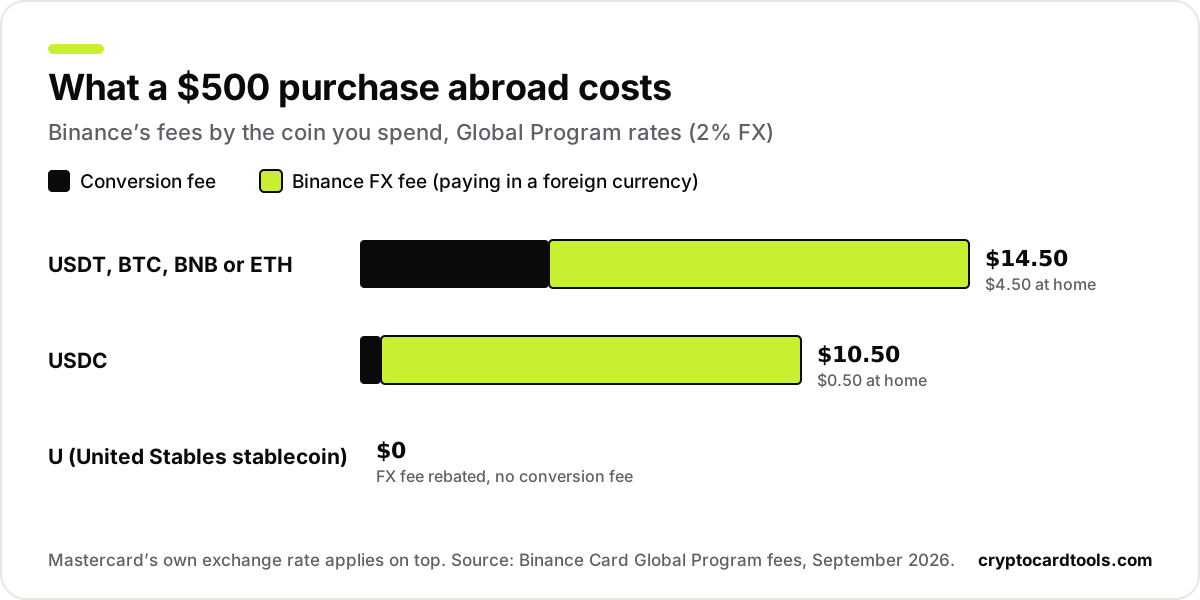
Your payment priority list sets which coin Binance sells first, and each coin carries a different fee.
A $500 purchase in a foreign currency with USDT costs $4.50 in conversion plus $10 in FX, or $14.50. Paying the same amount in USDC costs $10.50.
Binance also accepts U, a stablecoin from United Stables, in selected countries. Spending U carries no conversion fee, and Binance rebates the FX fee in USDC straight after the purchase.
At home, the gap between coins is smaller but still real. A $500 purchase costs $4.50 with USDT and $0.50 with USDC.
If you already hold dollars in stablecoins, moving them to USDC or U before you spend is the simplest way to cut your costs.
Physical Card and ATM Fees
The physical card is only offered in some countries, and your card dashboard shows whether you qualify. In the Global Program, standard shipping costs $10 and premium shipping costs $70.
Brazil charges no issuance fee. Argentina's first physical card is free until the end of 2026.
ATM withdrawals are free twice a month. After that, each withdrawal costs $1.50, and the ATM operator may add its own charge.
Cash withdrawals don't count toward cashback. Frequent ATM users will lose part of the card's value to both the fee and the missing rewards. For moving larger amounts to a bank, our guide to the best crypto offramps compares cheaper routes.
Our card cost calculator works out a full year of fees from your own spending and ATM habits.
Binance Card Cashback
Binance changed the cashback tiers on June 1, 2026, and the same rates now apply across the Global Program. Your monthly spending sets your rate.
Below $100 a month, you earn 1.5%.
From $100 to $1,000, the rate rises to 2%. At $1,000 or more, you earn 3%, capped at $100 of cashback a month.
The tier you reach applies to all of that month's eligible spending, not only the part above the threshold. Spending $1,000 in a month earns $30, not a blend of rates.
The cap starts to bite at about $3,333 of monthly spending. Above that, extra spending earns no cashback.
Brazil uses the same rates in reais, with thresholds of R$500 and R$5,000 and a R$500 monthly cap. Argentina's program pays the same rates in BTC, capped at 148,000 pesos a month.
What Cashback Is Worth After Fees
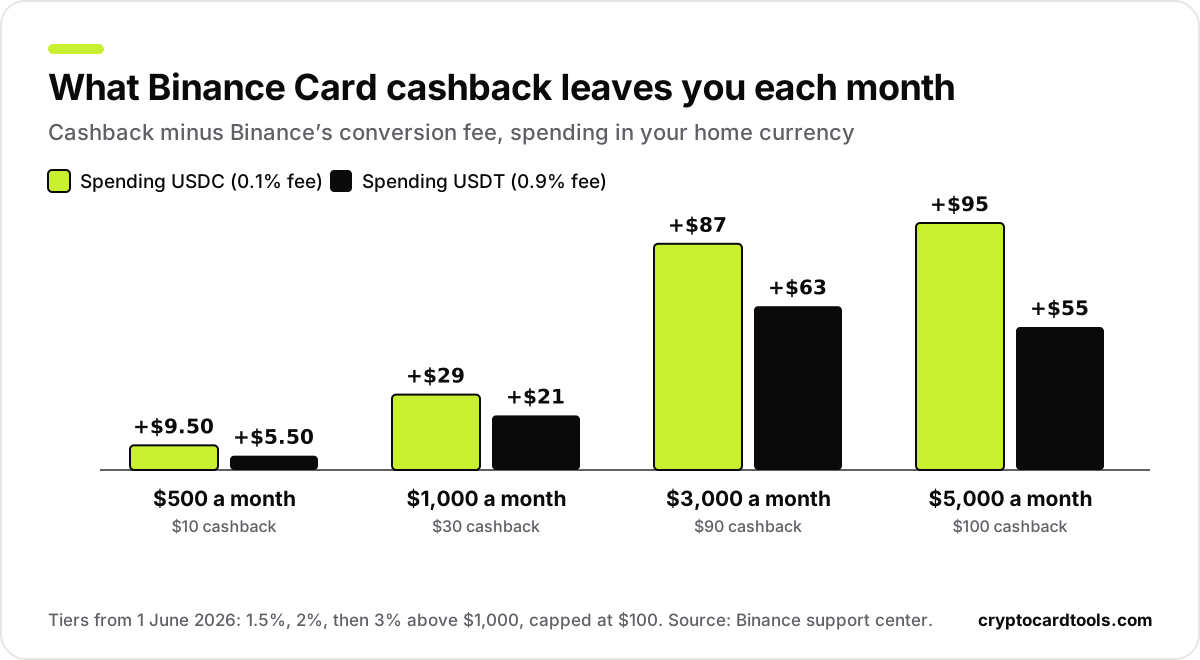
The conversion fee comes out of the same purchases that earn cashback. Your real return is the difference between the two.
At $1,000 a month spent at home in USDT, you earn $30 and pay $9, which leaves $21. The same spending in USDC leaves $29.
At $5,000 a month, the $100 cap applies. USDT spending leaves $55 after fees, while USDC leaves $95.
On foreign purchases, a 2% or 3% FX fee cancels most of the cashback. The card works best for spending in your home currency.
How and When Cashback Is Paid
Binance pays cashback by the 10th of the following month. Depending on your country, it arrives in USDC or BTC, or in reais in Brazil.
From late September 2026, Binance sends it to your Spot account rather than your Funding account.
Only completed purchases count. Binance says settlement can take up to 30 days, so a purchase late in the month may count toward the next one.
Several transaction types earn nothing: cash withdrawals, payments to banks, brokers and other financial firms, government payments and gambling. Binance can also claw back cashback when a merchant refunds you.
In Argentina and Brazil, purchases paid from your local currency balance skip the conversion fee but don't earn cashback. Only the crypto part of a payment counts.
Binance has also run promotions paying extra cashback on U spending. Those campaigns change often, so the card dashboard is the place to check what applies this month.
Binance Card Limits
Your spending limits depend on your identity verification level, not on whether your card is virtual or physical. Binance shows your current limits under Transaction Limit on the card dashboard.
Binance publishes sample figures for Mexico. At the first verification level, you can spend $1,000 a day and $1,000 a month, up to $12,000 a year.
The second level raises that to $5,000 a day and $15,000 a month, with an annual limit of $60,000. At the third, the limits reach $10,000 a day, $40,000 a month and $100,000 a year.
Brazil sets its limits in reais: R$25,000 a day, R$50,000 a month and R$200,000 a year. ATM withdrawals there are capped at R$3,000 a day.
Argentina's limits are the highest in local terms, starting at 12.58 million pesos a day at the first level. Cash withdrawals there run from $600 to $1,400 a day, depending on your verification level.
If a limit feels too low, Binance support can explain how to move to the next verification level.
How to Get a Binance Card
Getting the virtual card takes minutes if you already have a verified account. The process looks like this in the Binance app:
- Create a Binance account and complete identity verification with a valid ID.
- Open the Binance Card page and tap Apply now. If the button is missing, the card isn't offered where you live.
- Fill in your details, including your expected monthly spend in USD, which is a required field.
- Confirm your residential address and submit the application.
- Wait for review. Binance issues the virtual card within 15 minutes of approval, and it activates automatically.
- Add the card to Apple Pay or Google Pay, where supported, to pay in stores.
- If your country offers a physical card, order it from the card dashboard.
Binance currently asks for at least three coins in your payment priority list. If one runs out, the card moves to the next coin on the list.
Using the Binance Card Day to Day
The card spends from your Funding account by default. You can also set your Spot account as a backup source, which helps if you keep most of your crypto there.
Placing BTC near the bottom of your payment priority list avoids selling it by accident. The coin-choice section above shows why a stablecoin belongs at the top.
The card dashboard shows the card number, CVV and expiry date after a security check. You can freeze the card instantly if you lose your phone or spot a charge you don't recognise.
A Borrow button links to Binance's flexible loans, which let you borrow USDT against your crypto instead of selling it. That can help with a large purchase, but a loan against volatile collateral carries liquidation risk.
Is the Binance Card Safe?
The card itself is protected like any Mastercard. You get instant alerts, freeze controls, spending limits and access to Mastercard's dispute process.
The bigger question is the account behind it. Your crypto stays in custody with Binance until you spend it, so the card is only as safe as the exchange.
Binance publishes monthly proof-of-reserves reports that let you verify its customer balances are backed.
Its regulatory history is mixed. In November 2023, Binance and its founder pleaded guilty in the US to anti-money laundering and sanctions violations. The company agreed to pay more than $4 billion.
In 2026, the EU exit showed how quickly access can change for a whole region. Keeping only your spending money on Binance, rather than your long-term savings, limits your exposure if access in your country changes.
The Binance Card safety check scores licensing, custody, reserves and incidents with a source for each factor. For the wider picture, our guide to crypto debit card risks covers what applies to every custodial card.
Binance Card vs the Alternatives
RedotPay is the main alternative for anyone outside Binance's list. It works in far more countries across Asia, Africa and Latin America, and its card isn't tied to an exchange balance. RedotPay doesn't serve India, Indonesia or the US, though. Our RedotPay review covers its fees in depth, and the RedotPay vs Binance Card comparison sets the two side by side.
In Australia, the OKX Card offers a virtual Mastercard with a 0.1% spread and no FX fee. Our OKX Card review covers its regional versions.
The Bybit Card is the closest like-for-like option from another exchange, and our Bybit Card review covers it in full. The Bybit Card vs Binance Card comparison shows where each one comes out cheaper.
For a broader view, our best crypto cards guide ranks every card we track by availability, cost and safety.
Common Binance Card Problems
A declined payment is usually a balance problem. If the coins in your payment priority list can't cover the purchase, Binance declines it even when your Spot account holds more.
Turning on the Spot account backup fixes that in most cases.
Missing cashback usually comes from settlement timing or an excluded merchant type. A purchase that hasn't settled by the end of the month counts toward the next month instead.
If the Apply button doesn't appear, the card isn't offered for the country on your verified account. Binance checks the country of residence tied to your identity verification.
Pros and Cons
Pros
- Spends crypto straight from your Binance account without a separate top-up
- Free virtual card with no annual fee, issued within minutes
- 1.5% to 3% cashback, applied to the whole month once you reach a tier
- Low 0.1% conversion fee on USDC, and no fees at all with U
- Two free ATM withdrawals a month where a physical card is offered
Cons
- Not available in the US, the UK, Canada, the EU or India
- 0.9% conversion fee on USDT, BTC and other coins
- 2% to 3% FX fee, or 6% to 7% in Argentina
- Cashback capped at $100 a month
- Custodial: your crypto sits with Binance until you spend it
- Binance's regulatory record includes a 2023 US guilty plea and the 2026 EU exit
Final Verdict: Is the Binance Card Worth It?
For existing Binance users in the Global Program countries, the Binance Card is a good everyday card. Spent in your home currency with USDC, it returns close to the full 2% or 3% in cashback.
It is a weaker choice for travel, especially from Argentina. Abroad, the FX fee absorbs most of the reward.
If you live in the US, the UK, the EU or India, the card simply isn't an option. RedotPay or another card from our finder will serve you better.
Get the Binance Card
If you live in a supported country, you can apply from the Binance Card page in the Binance app. Our Binance Card page keeps the fee table, cashback tiers and country list up to date.
Get the Binance Card Binance Card fees and limits
The crypto card finder lists every card offered in your country if the Binance Card isn't available there.
Frequently asked questions
Is the Binance Card available in the USA?
Is the Binance Card available in Europe?
Is the Binance Card available in India?
What are the Binance Card fees?
How much cashback does the Binance Card give?
Does the Binance Card still offer 8% cashback?
Is the Binance Card a debit or credit card?
Can I withdraw cash from an ATM with the Binance Card?
Which crypto can I spend with the Binance Card?
Is the Binance Card safe?
Sources
- An Overview of the Binance Card - Global Program
- Binance Card - Global Program: Fees and Limits
- How Does the Binance Card - Global Program Cashback Work?
- Binance Card - Global Program: Fees and Limits (Mexico)
- Binance Argentina Card: Fees and Limits
- How Does Binance Brazil Card Cashback Work?
- Euronews: Binance to halt crypto services across EU countries
- US Department of Justice: Binance and CEO plead guilty
Related tools
Keep reading
OKX Card Review 2026: Fees, Cashback, Countries and Limits
OKX Card review for 2026: 0.1% spread, 2% to 10% USDG cashback and its real monthly caps, every country it works in, and who should skip it.
Bybit Card Review 2026: Fees, Cashback, and Availability
Read our Bybit Card review for 2026. See cashback tiers, fees, and the countries where it's actually available. Get the facts before you apply.
MetaMask Card Review 2026: Fees, Cashback, Countries and Limits
Honest MetaMask Card review: 2026 fees, 1% to 3% mUSD cashback, the 45 countries where it works, the US and UK sign-up pause, limits and self-custody risks.
