Cheapest Crypto Onramp in 2026: Cut Fees to 0.1%
Contents
- Which Crypto Onramp Costs the Least Right Now?
- Fee Anatomy: Deposit, Trading, Spread, and Withdrawal
- Bank Transfer vs Card Purchase: The Real Cost Difference
- Lowest-Fee Exchange Comparison by Fiat Rail
- The Stablecoin Intermediary Route
- P2P Onramps: When They Win and What You Risk
- How to Minimize Onramp Fees: A Checklist
- Frequently asked questions
Quick answer
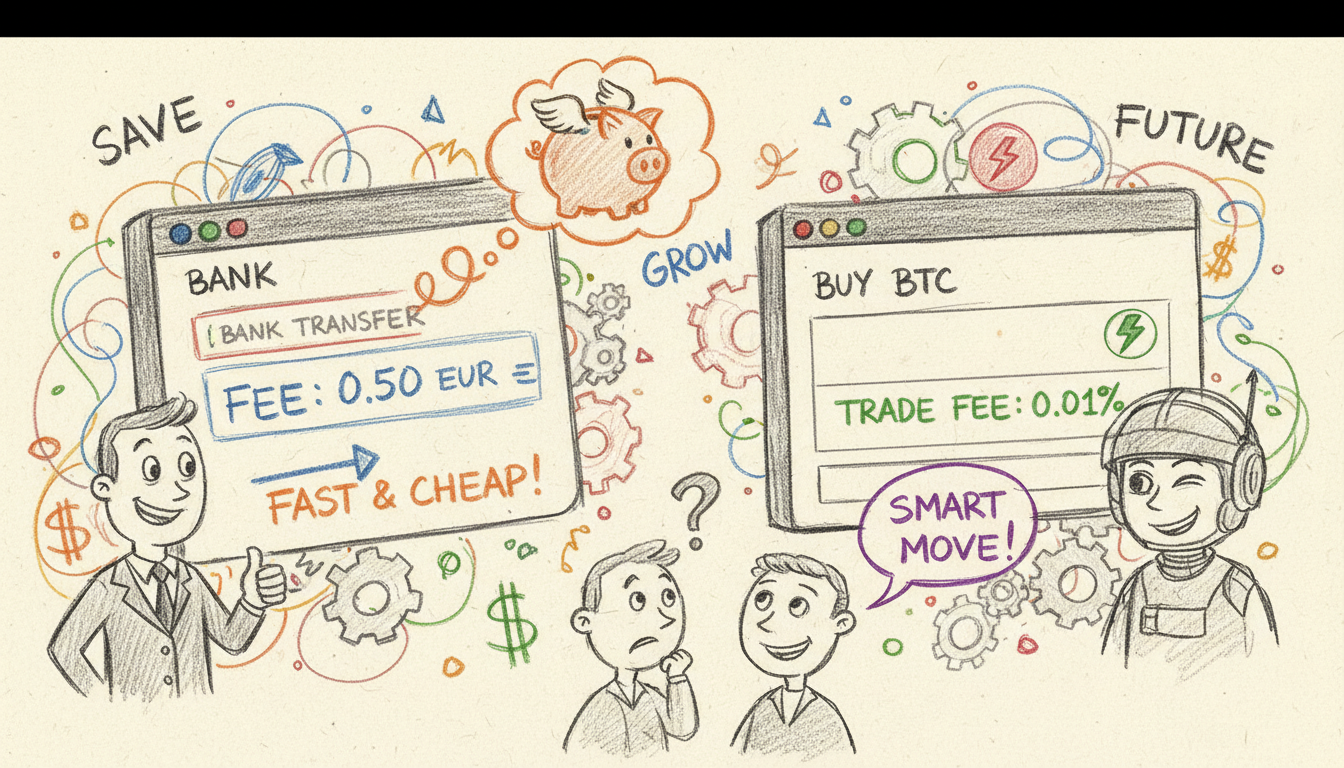
For most people, the cheapest crypto onramp in 2026 is a SEPA or ACH bank transfer to a low-fee exchange like Kraken Pro or Binance. Place a limit order. Total cost lands between 0.1% and 0.80%. Card purchases cost 3% to 5%.
Key takeaways
- Bank transfers via SEPA or ACH usually cost zero deposit fees on major exchanges. Card purchases add 3% to 5%.
- Place limit orders on Kraken Pro or Binance to pay maker fees as low as 0.1%. This avoids hidden spreads.
- Buy USDC first when a direct fiat pair has poor liquidity. The extra trade can still cut total cost.
- P2P platforms may charge zero fees, but seller markup and counterparty risk can erase the saving.
This guide from Crypto Card Tools breaks down the real fee components and compares low-fee exchanges by fiat rail. You get a checklist to cut cost on every fiat to crypto purchase.
For small amounts, P2P may be cheaper, but check spread and counterparty risk.
Which Crypto Onramp Costs the Least Right Now?
A bank transfer plus a limit order on a low-fee exchange is the cheapest crypto onramp for most people. SEPA deposits in Europe and ACH deposits in the US usually cost nothing. Binance charges 0.1% for spot trading. Kraken Pro charges 0.40% maker and 0.80% taker in its entry tier, for accounts under $2,500 in 30-day volume, according to the Kraken fee schedule.
Buying $1,000 of Bitcoin this way costs about $1 on Binance or $4 on Kraken Pro. The same purchase with a debit card on Coinbase costs roughly $39.90, because of a 3.99% card fee. That gap widens as your order grows.
The cheapest crypto onramp depends on your region, order size, and pair liquidity. If your bank blocks SEPA or ACH transfers, you lose the low-fee rail. Some banks still flag exchange deposits as high risk. Check with your bank first. Our guide to crypto-friendly banks lists which banks cap or block exchange transfers. If you are in the EU, note that Binance stopped accepting new customers there on July 1, 2026, after it withdrew its application for a licence under the MiCA regulation, so a new signup needs a different exchange for now.
A bank transfer is free or near zero, but not every exchange supports it cleanly. Some charge a flat fee for SEPA or ACH, especially outside Europe and the US. Always confirm the deposit method before opening an account.
To reverse cash into fiat cheaply, see our cash out guide.
Fee Anatomy: Deposit, Trading, Spread, and Withdrawal
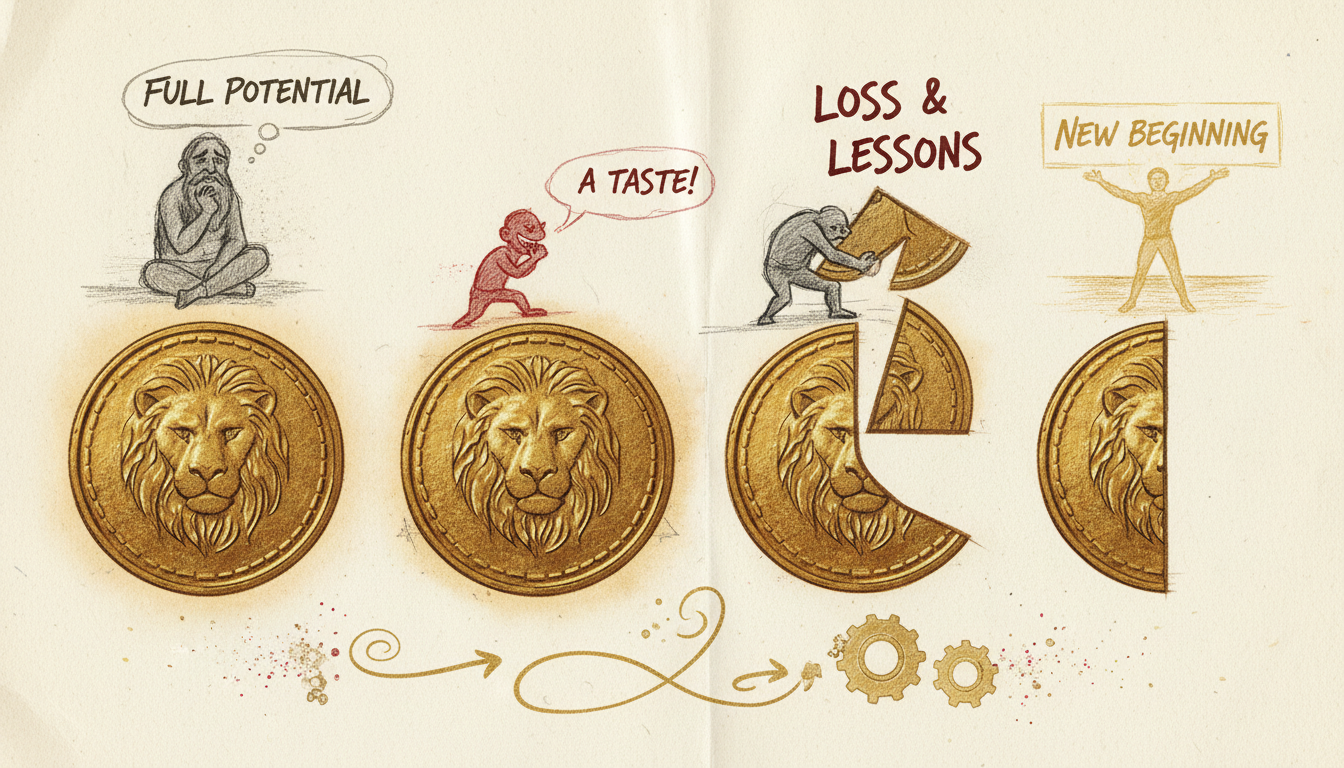
Four costs decide what you actually pay. Deposit fee covers moving money in. Trading fee is the maker or taker cost.
Spread is the gap between buy and sell price. Withdrawal fee covers moving crypto out.
A maker order adds liquidity. It sits on the order book and waits to fill. A taker order removes liquidity. It fills immediately against existing orders.
Makers usually pay less, which is why a limit order beats a market order.
Instant buy services hide the spread inside the quoted price. If Bitcoin trades on the open market at $60,000 and the card purchase screen shows $62,400, that $2,400 difference is spread. You pay it in addition to any card fee.
Coinbase fee disclosure lists the 3.99% fee, but the spread is not a separate charge.
Total cost equals deposit fee plus trading fee plus spread plus withdrawal fee. Missing any single term leads you to undercount the real price.
Withdrawal fees vary by network and coin. Flat fees and percentage fees both exist. Holders who keep coins on the exchange can ignore this cost. Anyone moving coins to a wallet should add the withdrawal fee to the total.
To check hidden spread, compare the instant quote against a public order book. Kraken and Binance both show live bid and ask prices. A large gap means you are paying more than the trading fee suggests.
On Coinbase, a $1,000 card purchase shows a $1,039.90 charge. The 3.99% fee is $39.90. The spread might add a few dollars more, but the exact amount varies by moment and market depth.
Bank Transfer vs Card Purchase: The Real Cost Difference
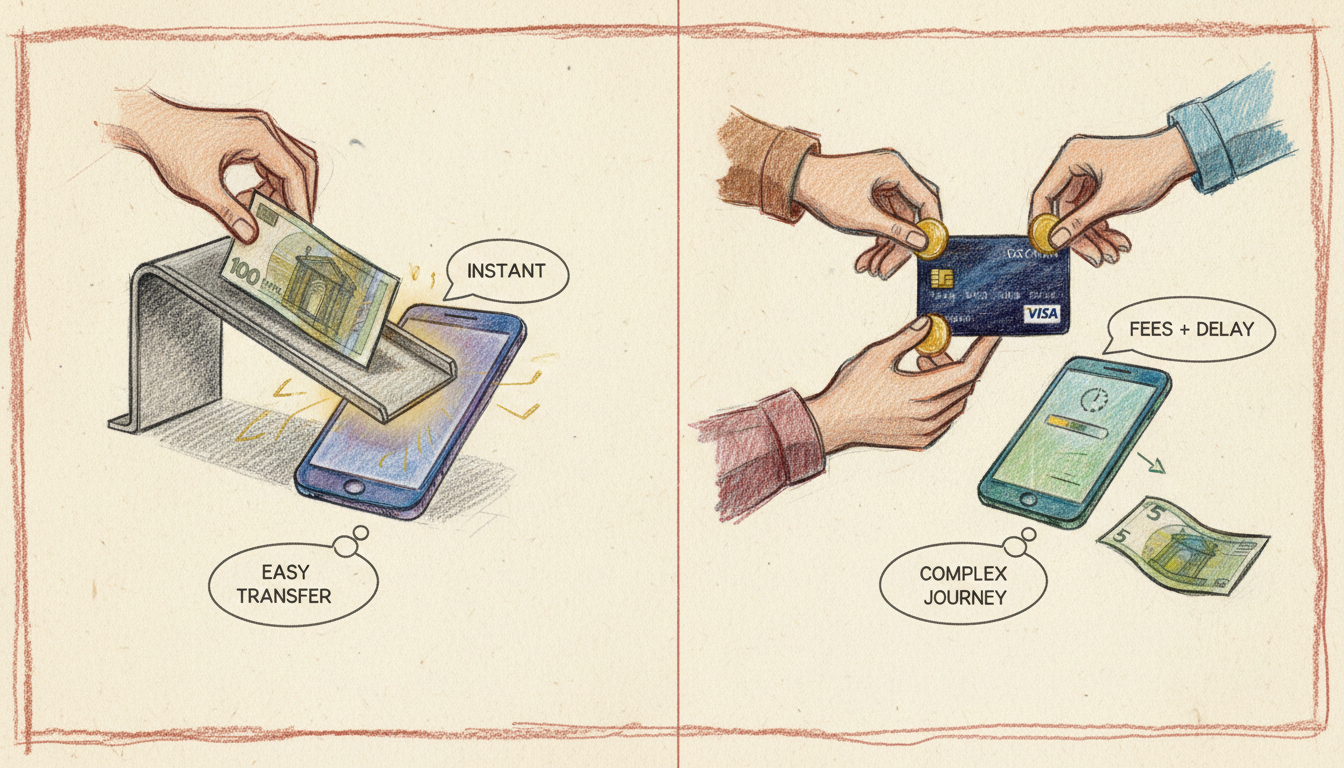
A card purchase settles in minutes. A bank transfer takes one to five business days. That speed difference drives the fee gap. Card rails charge merchants a processing fee, and exchanges pass it to you. Bank rails like SEPA and ACH cost almost nothing to process.
Coinbase charges 3.99% on debit card buys. Binance card fees vary by region but often run around 2%. On top of any card fee, instant purchases include a spread. The quoted price sits above the live market price. You pay both.
A SEPA or ACH deposit on Kraken or Binance is free for most users. Then a limit order costs 0.1% to 0.80% depending on the exchange and order type. No hidden spread, because you set the price.
The table below shows cost for three order sizes. It assumes a 0.40% maker fee for bank transfers, using Kraken Pro's entry tier, a 3.99% card fee, and a 0.1% stablecoin route fee.
| Order size | Card purchase (fee only) | Bank transfer + limit order | Stablecoin route |
|---|---|---|---|
| $100 | $3.99 | $0.40 | $0.10 |
| $1,000 | $39.90 | $4.00 | $1.00 |
| $10,000 | $399.00 | $40.00 | $10.00 |
Spread is not included in the card column because it varies by moment and exchange. The bank and stablecoin columns assume you place a maker order.
Many people assume card is cheaper because the fee is not a separate line. The receipt shows one total. The fee and spread are baked into the unit price, so you never see them itemized.
A $1,000 card purchase might show as a $1,045 total, but the extra $45 above market never appears as a line item.
Bank transfers are slower. A SEPA transfer usually settles in one business day. ACH can take three to five days. If you need crypto immediately, that delay is a real cost. For planned buys, the savings make this the cheapest crypto onramp.
Lowest-Fee Exchange Comparison by Fiat Rail
The cheapest fiat rail depends on where you live. SEPA covers euro deposits across the EU and several nearby countries. ACH covers US dollar deposits from American banks. Both rails are free on most major exchanges, but the trading fee after deposit separates cheap from expensive.
The table compares five exchanges across the key fee points. Card fee reflects standard retail purchases, not the pro trading interface.
| Exchange | USD deposit (ACH) | EUR deposit (SEPA) | Maker fee | Taker fee | Card purchase fee |
|---|---|---|---|---|---|
| Binance | Free | No new EU signups since Jul 2026 | 0.10% | 0.10% | About 2% |
| Kraken Pro | Free | Free | 0.40% | 0.80% | Not a core product |
| Coinbase Advanced | Free | Free | 0.50% (US), 0.25% (EU/UK) | 0.90% (US), 0.50% (EU/UK) | 3.99% (standard) |
| Gemini | Free | Free | Tiered | Tiered | Higher than Binance |
| Bitstamp | Free | Free | Tiered | Tiered | Not a core product |
Gemini and Bitstamp publish tiered fee schedules that start higher than Binance for small accounts. Their maker and taker fees drop as 30-day volume grows. Both support SEPA and ACH deposits for free, but you need to check the current tier before placing a large order. Lyra Terminal's exchange fee comparison lists current maker and taker tiers side by side.
Binance spot trading fees sit at 0.1% for both maker and taker, the lowest flat rate among major exchanges, though this applies only to existing accounts since Binance stopped onboarding new EU customers on July 1, 2026. See the official Binance fee schedule for the full discount table.
Kraken Pro and Bitstamp have strong SEPA coverage in Europe. Binance and Coinbase support ACH across most US states. Some US states restrict Binance.US, so check availability before signing up.
Coinbase standard card fees are 3.99%, but Coinbase Advanced uses ACH and lower maker and taker fees. Since September 16, 2026, the entry tier charges 0.50% maker and 0.90% taker in the US, and 0.25% maker and 0.50% taker in the EU and UK. That is the cheaper option once you trade through Advanced rather than the standard buy screen.
Stablecoin pairs matter too. USDC and USDT pairs against fiat often trade with deep liquidity and tight spreads. If your target coin lacks a direct fiat pair, a stablecoin bridge is cheaper than a low-volume direct pair.
This comparison covers exchanges, not debit cards. To spend crypto directly, see our crypto card fees guide.
The Stablecoin Intermediary Route
Sometimes the direct fiat to crypto pair is illiquid. The spread is wide, and a market order eats a large cost. In that case, routing through a stablecoin can save money. Follow these steps:
- Deposit fiat via SEPA or ACH to an exchange. The deposit is free on most major platforms.
- Buy a stablecoin like USDC. Kraken charges 0.20% maker and 0.20% taker on its stablecoin pairs in the entry tier, well below its regular spot fees.
- Trade the stablecoin for your target coin on a liquid pair. USDC pairs often have tighter spreads than direct fiat pairs.
Kraken's stablecoin pairs carry a reduced 0.20% fee instead of the regular spot rate, which cuts the cost of this step. Binance also lists USDC pairs against most major coins with 0.1% trading fees.
A stablecoin bridge adds one extra trade. That means one more trading fee and one more taxable event in some jurisdictions. If a direct pair is already liquid, skip the stablecoin. The extra step is only worth it when the direct pair has poor liquidity or a wide spread.
Some exchanges charge a small fee on stablecoin purchases, even if the fiat deposit is free. Always confirm the fee schedule for the specific stablecoin pair before executing.
A euro user buying a low-cap altcoin might see a 2% spread on the direct EUR pair. Going EUR to USDC to altcoin could cost 0.1% plus 0.1%, under 0.3% total. That is the stablecoin route's value: it replaces one wide spread with two tiny fees.
P2P Onramps: When They Win and What You Risk
P2P platforms like Binance P2P and LocalCoinSwap connect buyers directly with sellers. The platform often charges no fee to the buyer. The seller sets the price, and that price includes their markup or spread. A zero platform fee still leaves a cost.
Payment methods on P2P range from bank transfer to cash deposit to gift cards. Bank transfer is the most common and has a paper trail. Cash trades happen in person and carry higher risk. Some payment apps allow chargebacks, which creates fraud risk for both sides if the platform lacks escrow.
Binance P2P fees shows maker orders stay free. Takers on USDT pairs pay a flat 0.05 USDT per order in more than 95 fiat markets, a charge Binance phased in during 2024. Either way, the actual price you pay is set by the seller, so compare the P2P price to the spot price before accepting a trade.
P2P wins in three cases: small orders, blocked banking regions, and need for unusual payment methods.
The main risks are counterparty default, payment reversal, and platform dispute delays. Use an escrow service, check the seller's completed trade count, and never trade outside the platform.
Credit card chargebacks on P2P are a known attack. A buyer pays with a card, receives crypto, then disputes the payment. Many P2P platforms ban credit card funding for this reason.
If you need a card that works off an exchange, our no-KYC crypto cards guide covers options and limits. P2P can be cheaper for small amounts, but only when you accept the risk.
How to Minimize Onramp Fees: A Checklist
Run through this checklist every time you buy crypto with fiat.
- Use a bank transfer, not a card. SEPA and ACH deposits are free on most low-fee exchanges.
- Place limit orders instead of market orders. A maker fee is usually half the taker fee or less.
- Check for zero-fee promotions. Exchanges sometimes waive trading fees on specific fiat pairs for a limited time.
- Consider a stablecoin intermediary when the direct fiat pair is illiquid. The extra trade often costs less than a wide spread.
- Compare total cost, not just the stated fee. Add deposit, trading, spread, and withdrawal costs before choosing.
- Confirm your bank supports transfers to crypto exchanges. Not every bank allows SEPA or ACH to these platforms.
Frequently asked questions
Are there any crypto exchanges with zero fees for fiat deposits?
Yes. Most major exchanges charge nothing for SEPA deposits in Europe and ACH deposits in the US. This includes Kraken, Coinbase, Gemini, Bitstamp, and Binance where it still accepts new customers (Binance stopped onboarding new EU customers on July 1, 2026). Some smaller exchanges or international wire deposits do carry fees, so check the deposit page before sending money.
Does it cost money to deposit USD on Coinbase?
No. ACH transfers from a US bank account are free on Coinbase for deposits and withdrawals. Wire transfers may incur a fee. Avoid debit card deposits, which cost 3.99%.
What is the cheapest way to buy Bitcoin with USD?
The cheapest crypto onramp for USD is a free ACH transfer to a low-fee exchange. Then place a limit order on the BTC/USD pair. On Kraken Pro that costs about 0.40% maker in the entry tier. On Binance it costs 0.1%. Total cost for $1,000 is about $1 to $4. Card purchases cost around $39.90 for the same amount.
Is buying stablecoins first cheaper than buying crypto directly?
Sometimes. If the direct fiat pair has poor liquidity, buying USDC at 1:1 with no fee and then trading USDC for the target coin can reduce the spread. The extra trade adds one fee, so only use this route when the direct pair is illiquid or wide.
How do P2P crypto onramps compare in fees to centralized exchanges?
P2P platforms often charge zero explicit fees, but the seller sets the price with a markup. The total cost can be lower for small amounts or in restricted regions. Counterparty risk and payment reversal risk are higher than on centralized exchanges.
Frequently asked questions
Are there any crypto exchanges with zero fees for fiat deposits?
Does it cost money to deposit USD on Coinbase?
What is the cheapest way to buy Bitcoin with USD?
Is buying stablecoins first cheaper than buying crypto directly?
How do P2P crypto onramps compare in fees to centralized exchanges?
Related tools
Keep reading
Best Crypto Offramp in 2026: How to Cash Out Crypto Without Losing Money
The cheapest ways to cash out crypto in 2026: exchange fees, P2P, crypto cards and ATMs compared, with the best offramp for the US, EU, UK, India and more.
Honest RedotPay Card Review 2026: Fees, Limits, Countries and Risks
Honest RedotPay card review with official 2026 fees, spending and ATM limits, countries where you can't get the card, Pro cashback, and account freeze risks.

Tria Card Review 2026: Fees, Cashback, Access Code and a Real Sign-Up
Tria card review from a real sign-up: fees, 4.5% to 6% cashback, limits, strict KYC, India and Indonesia availability, futures, Earn and the access code.