Top 5 ZEC Wallets: Where to Store Your Zcash in 2026
Contents
- Quick answer
- Why Choosing a Zcash Wallet Is Different
- How We Chose the Best ZEC Wallets
- 1. Zodl: The Best Zcash Wallet for Most People
- 2. Keystone 3 Pro with Zodl: The Best Hardware Wallet for Shielded ZEC
- 3. Ledger Wallet: Native Shielded Zcash for Ledger Owners
- 4. Zingo!: The Best Desktop Zcash Wallet
- 5. Unstoppable Wallet: Shielded ZEC Beside Your Other Coins
- Zcash Wallets That Almost Made the List
- ZEC Wallets to Avoid in 2026
- How to Move ZEC From an Exchange Into a Shielded Wallet
- Keeping Your Zcash Private After You Store It
- What Comes Next for Zcash Wallets
Zcash lets you hold and send money that nobody else can trace. Its shielded transactions hide the sender, the receiver and the amount. The coin still trades on the largest exchanges and sat inside the top ten by market value at the end of September 2026.
That privacy only exists if your wallet uses it. Around 29% of all ZEC now sits in shielded pools, according to the network statistics published on z.cash. The rest lives on transparent addresses that work exactly like Bitcoin, visible to anyone with a block explorer.
If you bought ZEC on an exchange, you have probably felt the gap between the promise and the practice. Your withdrawal landed on a transparent address. The wallet you already owned showed a balance, so nothing suggested you were missing anything.
But the best ZEC wallets in 2026 are a much smaller group than the list of apps that display a Zcash balance. The July 2026 Ironwood upgrade replaced the Orchard shielded pool, and several well-known wallets never made the jump. One popular mobile wallet can no longer send ZEC at all.
We checked each of these wallets against its own release notes and documentation as of September 30, 2026. Five made the cut for storing Zcash. The rest appear so you know why to skip them.
Quick answer
- Best overall: Zodl (formerly Zashi). Shielded by default, open source, iOS and Android, with Tor and built-in swaps through NEAR Intents.
- Best hardware wallet for shielded ZEC: Keystone 3 Pro paired with Zodl. Air-gapped signing with your keys never touching a phone.
- Best for Ledger owners: Ledger Wallet on desktop, which added native shielded Zcash on September 23, 2026.
- Best desktop wallet: Zingo!, an open-source wallet for Windows, macOS, Linux, Android and iOS.
- Best multi-coin wallet: Unstoppable, which holds shielded ZEC alongside Bitcoin, Ethereum and stablecoins.
- Skip for now: Nighthawk (can't send), YWallet (no longer updated), Trezor (transparent only), and multi-coin wallets that only show transparent balances.
Why Choosing a Zcash Wallet Is Different
With most coins, a wallet is a container. With Zcash, the wallet decides whether your money is private at all.
Every ZEC balance lives in one of two places. A transparent address starts with "t" and behaves like a Bitcoin address, so anyone can see what it holds and where the funds came from. A shielded address hides all of that behind zero-knowledge proofs, the cryptography that lets the network verify a payment without seeing its contents.
Wallets that support shielded ZEC usually give you a unified address, which starts with "u". It works as a single address that receives into your shielded balance without you having to pick the right type.
Zcash address types at a glance
- t-address: transparent, like Bitcoin. Balance and history are public.
- Shielded address: sender, receiver and amount hidden by zero-knowledge proofs.
- u-address (unified): one address that receives into your shielded balance.
Many popular multi-coin wallets fail on exactly this point. They show your ZEC, but every coin sits on a transparent address, so you get Zcash's price without Zcash's privacy.
What the Ironwood upgrade changed
Zcash's shielded pools have been rebuilt more than once. Sprout came first, Sapling followed in 2018, and Orchard arrived in 2022 with unified addresses.
On May 29, 2026, a researcher found a flaw in Orchard's proving circuit that could have allowed counterfeit ZEC. The network shipped an emergency fix in June, then activated the NU6.3 upgrade, named Ironwood, on July 28, 2026. Orchard is now spend-only. A new Ironwood pool holds shielded funds going forward.
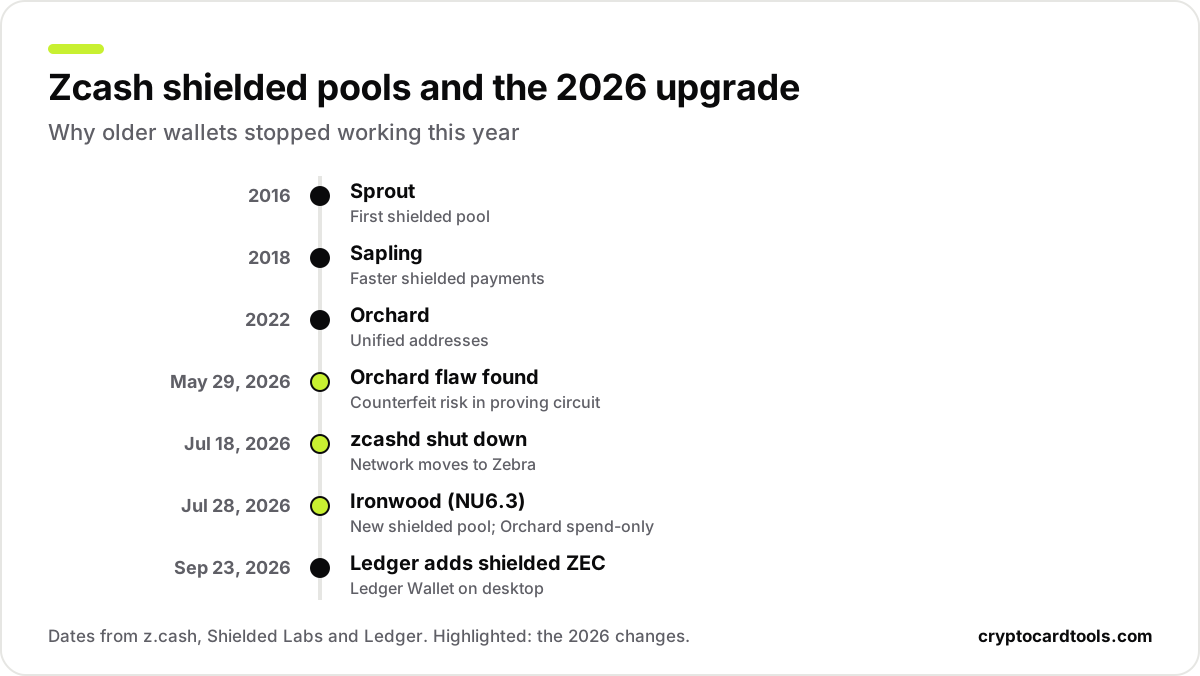
For you, this means two things. Any ZEC still sitting in Orchard needs to move to Ironwood, which the good wallets handle with a guided migration. A wallet that hasn't shipped Ironwood support since July can't receive shielded payments properly today.
The node software changed at the same time. The original zcashd client shut down on July 18, 2026. The network now runs on Zebra, maintained by the Zcash Foundation. Wallets that depended on old zcashd infrastructure had to rebuild or stop.
How We Chose the Best ZEC Wallets
Shielded support was the first filter. A wallet had to receive and send from the Ironwood pool, confirmed in its own release notes, not a marketing page.
Custody came next. Every pick holds your keys on your own device, so no company can freeze your ZEC the way an exchange can. Our guide to cold wallets explains how offline keys protect coins you rarely move.
We also weighed maintenance. Zcash upgrades break wallets that stop shipping updates, and 2026 proved that twice. Each pick has released Ironwood-ready software since July.
Open source counted in a wallet's favour, because it lets researchers check the privacy claims. Finally, we looked at what the wallet does around your ZEC: Tor routing, hardware pairing, swaps and spending.
1. Zodl: The Best Zcash Wallet for Most People
Zodl is the wallet most Zcash users should start with. It began life as Zashi, built inside Electric Coin Company, the firm that launched Zcash. In February 2026 the team behind it left ECC and formed a new company, Zcash Open Development Lab, taking the wallet with them under the Zodl name.
Everything about Zodl is shielded by default. New funds land in the Ironwood pool. The app only exposes a transparent address if you go looking for one. When ZEC arrives on a transparent address, Zodl prompts you to shield it.
The app runs on iPhone and Android, with builds on the App Store, Google Play, F-Droid and GitHub. There is no desktop version, which is the one thing that keeps it from being a complete answer.
What Zodl adds beyond storage
A Tor mode, in beta since August 2025, routes transaction submissions and balance lookups through the Tor network. That closes a gap most privacy coin wallets ignore: a shielded transaction still reveals your IP address to the server that relays it.
Built-in swaps run through NEAR Intents, so you can move from Bitcoin or stablecoins into ZEC without touching an exchange. NEAR Intents works by letting you state the trade you want while independent market makers compete to fill it across chains, so no exchange account or deposit address sits in the middle.
A feature called CrossPay lets you pay someone in USDC or BTC from your ZEC balance, also settled through NEAR Intents. Zodl connects to Flexa too, which handles checkout at retailers that accept it.
When Ironwood activated, Zodl shipped support the same week and followed with a guided Orchard-to-Ironwood migration in version 3.9.0 in August. Its new sync engine, Slipstream, cut the wait that used to make mobile Zcash wallets frustrating.
The code is open source under the MIT licence. We couldn't find a published third-party security audit, a gap to weigh before storing large sums.
Best for Anyone who wants private ZEC on a phone without studying address types first
Weak spots Mobile only, and no formal audit report
2. Keystone 3 Pro with Zodl: The Best Hardware Wallet for Shielded ZEC
Hardware wallets and shielded Zcash spent years apart. The cryptography behind shielded transactions needs more memory than most secure chips carry, so hardware wallets could only handle transparent addresses.
Keystone broke that pattern in December 2024. Its Keystone 3 Pro signs shielded Zcash transactions and pairs with Zodl through QR codes, so the device never connects to the internet or your phone by cable.
The flow is simple once set up. Zodl builds the transaction, you scan it with the Keystone, approve it on the device screen and scan the signed result back. Your private keys stay inside the Keystone's secure elements the whole time.
In July 2026 Keystone shipped firmware 3.0.2 with Ironwood support and batch signing for the migration. Keystone published a migration guide that requires Zodl 3.9.0 or later. The device also works with the newer Vizor and Noir Zcash wallets.
Air-gapped signing suits people holding ZEC for years rather than spending it weekly. If your seed phrase came from another device, our guide on migrating a hardware wallet seed shows why moving funds beats importing the old seed.
Best for Long-term holders who want shielded ZEC with the keys offline
Weak spots Costs around $150, and it needs a phone running Zodl
3. Ledger Wallet: Native Shielded Zcash for Ledger Owners
For years, Ledger devices stored ZEC on transparent addresses only. A third-party "Zcash Shielded" app from Zondax offered the only workaround. That changed on September 23, 2026, when Ledger announced native shielded Zcash inside its own Ledger Wallet software.
The new support uses the Ironwood pool. You add a shielded Zcash account next to a transparent one, receive on a shielded address and sign each spend on the device. No companion app is required.
The launch has limits
Shielded ZEC works in Ledger Wallet on desktop only, with mobile support promised for later. Ledger's announcement doesn't list which device models are included, so check your model in Ledger Wallet before moving funds.
If you already own a Ledger, this is the cheapest path to shielded ZEC with hardware security. If you don't, Keystone remains the more mature option, with almost two years of shielded support behind it.
Best for Existing Ledger users who keep their crypto in one hardware ecosystem
Weak spots Desktop only for now, with a feature that is one week old at the time of writing
4. Zingo!: The Best Desktop Zcash Wallet
Zingo! is the wallet for anyone who wants shielded Zcash on a computer. Zingo Labs builds it as open-source software for Windows, macOS and Linux, with matching Android and iOS apps.
It shielded funds by default before that was fashionable. Ironwood support arrived at the end of July 2026 across every platform. Later desktop releases added a private migration path from Orchard and experimental swaps.
Zingo! gives you more control than Zodl. You can choose which server the wallet syncs from, read full transaction details and see your balance broken down by pool. That level of detail suits people who want to understand where each coin sits.
The trade-off is polish. Zingo! looks like a tool built by engineers for engineers. Its documentation assumes you know what a lightwallet server is. Newcomers may prefer Zodl on mobile and Zingo-PC only when they need a desktop.
Best for Desktop users and anyone who wants to inspect their shielded balances in detail
Weak spots A technical interface and thinner documentation
5. Unstoppable Wallet: Shielded ZEC Beside Your Other Coins
Most multi-coin wallets treat Zcash as one more line in a list and skip shielding entirely. Unstoppable is the exception among widely used wallets.
Built by Horizontal Systems, it runs on iOS and Android, including an F-Droid build. Your Zcash balance is fully shielded, built on the same open-source Zcash SDK that powers Zodl. Its 2026 releases added Slipstream sync and an immediate Ironwood migration.
The appeal is one recovery phrase for everything. Bitcoin, Ethereum, stablecoins and shielded ZEC live in the same app. The entire codebase is public and verified by independent reviewers at WalletScrutiny.
Privacy has a cost in a multi-coin wallet, though. If the same app holds your ZEC and your Ethereum, a mistake with the public side can hint at who owns the private side. Keeping ZEC in its own account inside the wallet limits that.
Best for People who want one self-custody app for their whole portfolio without giving up shielded ZEC
Weak spots Less Zcash-specific tooling than Zodl or Zingo!, and privacy depends on how you separate accounts
Zcash Wallets That Almost Made the List
Edge Wallet has supported shielded Zcash on iOS and Android since January 2022 and remains a reasonable multi-coin choice. We couldn't confirm from Edge's own documentation that it has completed the move to Ironwood, so it sits just outside the top five until that's clear.
Brave Wallet brought shielded Zcash to the desktop browser in April 2025. Ironwood support was still working its way through Brave's testing channels at the end of September 2026, and mobile shielded support hasn't shipped. Once both land, Brave becomes a strong option for people already using the browser.
Zkool is the successor to YWallet, written by the same developer. It is the right destination for YWallet users, but it's young enough that we want to see a longer track record before recommending it for large balances.
ZEC Wallets to Avoid in 2026
Some wallets that ranked in older guides can now cost you privacy or access to your funds.
- Can't sendNighthawk: a popular shielded mobile wallet that stopped supporting outgoing ZEC transactions after the November 2025 network upgrade. Its App Store notes tell users to import their seed phrase into Zodl or Zingo! to reach their funds. Anyone still holding ZEC in Nighthawk should do exactly that.
- Not updatedYWallet: the power user's choice for years. Its developer has confirmed that no Ironwood updates are planned, with the last release in June 2026. Existing balances are safe, but the wallet can no longer keep up with the network. Zkool or Zodl are the natural next homes.
- Transparent onlyTrezor: supports Zcash on transparent addresses only. Trezor's own documentation says shielded transactions are not compatible with its devices, and the engineer who worked on its shielded support has described the project as postponed indefinitely. A Trezor is a fine place for Bitcoin. For Zcash, it removes the reason to hold the coin.
- Transparent onlyExodus, Trust Wallet and Guarda: display ZEC balances and let you buy and swap, but none of them advertises shielded support. Treat any ZEC in these wallets as public.
- No native ZECMetaMask and Coinbase Wallet: don't support Zcash natively at all. A third-party MetaMask Snap for shielded Zcash exists, but with a tiny user base it isn't a place to store savings.
- Least privateExchange accounts: Kraken's address guide states that withdrawals go to transparent "t" addresses only, and the exchange records every deposit and withdrawal against your identity. Our no-KYC crypto debit card review covers what that record exposes.
Our wallet safety checks score the multi-coin wallets above on open source, audits, key storage and past incidents.
How to Move ZEC From an Exchange Into a Shielded Wallet
Getting ZEC off an exchange is the point where most privacy is lost or won. The exchange can only send to a transparent address, so the first hop is always public.
Five steps from exchange to shielded
- Install Zodl or another shielded wallet and write down its recovery phrase on paper, never in a screenshot.
- In the wallet, find the transparent receiving address. Zodl shows it under the address options.
- Withdraw from the exchange to that transparent address. Kraken and most others reject "u" and "z" addresses.
- Once the ZEC arrives, use the wallet's shield option to move it into the Ironwood pool. Zodl prompts you automatically.
- From then on, share only your unified address when someone pays you.
The step people skip
Until you shield the deposit, the exchange, the block explorer and anyone you paid from that address can see your balance.
If you plan to spend ZEC rather than hold it, a card is often the easier route. Our guide to how crypto debit cards work explains the conversion at checkout, and our best crypto offramp guide compares the cost of selling back to cash. The cash-out calculator shows what each route costs at live rates.
Keeping Your Zcash Private After You Store It
The wallet handles the cryptography. A few habits handle the rest.
Reuse of transparent addresses is the most common leak. Every time you receive on a "t" address and shield afterwards, the deposit itself stays visible. Asking senders for your unified address avoids that entirely.
Memos travel with shielded transactions and are encrypted, but they are permanent. A memo that says "rent for flat 4B" links a payment to a person if your viewing key ever leaks. Short, neutral memos age better.
Hide your IP address too
A shielded transaction hides its contents, but the server relaying it sees your IP address. Zodl's Tor mode and Zingo!'s custom server option both reduce that exposure.
Recovery deserves a test. Before you move a large balance, restore your seed phrase on a second device and confirm the balance appears. YWallet's own developer gave the same advice. It applies to every wallet here.
What Comes Next for Zcash Wallets
Zcash is preparing NU7, the next network upgrade, which will bring shorter block times and a smoother issuance schedule once its activation height is set. Wallets that stayed current through Ironwood are well placed for it.
The larger shift is Crosslink, a hybrid proof-of-stake design from Shielded Labs that is running on an incentivised test network through autumn 2026. When it reaches mainnet, ZEC holders may be able to earn staking rewards, which will make the wallet you chose even more consequential. The z.cash upgrade pages track both projects.
For now, the best ZEC wallets are the ones that shield by default, ship every upgrade on time and keep your keys on your own device. Zodl for daily use, Keystone or Ledger for cold storage, Zingo! for the desktop and Unstoppable for a mixed portfolio cover almost every way people hold Zcash in 2026.
Frequently asked questions
What is the best ZEC wallet in 2026?
Does Ledger support shielded Zcash?
Does Trezor support shielded Zcash?
Which hardware wallet works with shielded ZEC?
What happened to Orchard, and do I need to move my ZEC?
Can I still use Nighthawk or YWallet?
What are NEAR Intents in Zodl?
Is Zcash in Exodus or Trust Wallet private?
Does MetaMask support Zcash?
Can I withdraw ZEC from an exchange straight to a shielded address?
What percentage of Zcash is shielded?
Can I stake Zcash?
Is an exchange a safe place to keep ZEC?
Sources
Related tools
Keep reading
Best XRP Wallet for Investors in 2026: Where to Hold XRP for the Long Term
The best XRP wallets for investors in 2026, from Ledger and Tangem to Xaman, with reserve rules, destination tags and the 2026 wallet hacks long-term holders should know.
Crypto-Friendly Banks in 2026: The Best Banks for Personal and Business Crypto Use
The most crypto-friendly banks for personal and business use in the US, UK and Europe, with each bank's crypto limits, fees and the catch before you open an account.
Best Crypto Offramp in 2026: How to Cash Out Crypto Without Losing Money
The cheapest ways to cash out crypto in 2026: exchange fees, P2P, crypto cards and ATMs compared, with the best offramp for the US, EU, UK, India and more.