How Does a Crypto Debit Card Work? Fees, Taxes, and Flow
Contents
- What is a crypto debit card?
- How does a crypto debit card work at the moment of payment?
- Crypto debit card vs crypto credit card
- Where the fees hide: spread, FX, ATM, and card charges
- Which assets should you spend with a crypto card?
- Tax implications of spending crypto
- How do you get a crypto debit card?
- Can you get a no-KYC crypto debit card in 2026?
- Frequently asked questions
Quick answer
Crypto debit card spends from a wallet or exchange balance. When you pay, the provider sells the selected crypto for fiat and settles the merchant through Visa or Mastercard. The merchant receives fiat, not crypto. You may pay conversion spreads, FX, ATM, and card fees. Spending crypto may be a taxable sale.
Key takeaways
- A crypto debit card is a prepaid-style card linked to an exchange or wallet balance. It is not a line of credit.
- At payment, the provider sells the selected crypto and settles the merchant in fiat through Visa or Mastercard. The merchant never receives crypto.
- The real cost often hides in conversion spreads, foreign transaction fees, ATM charges, and card fees rather than the headline annual fee.
- Spending appreciated crypto is usually a taxable disposal. The fiat value at purchase becomes the cost basis you need to report.
What is a crypto debit card?
Think of it as a prepaid card tied to your crypto balance. It works like a debit card, not a credit card. You load it with crypto, and the card spends from that balance when you make a purchase. There is no credit line, no monthly bill, and no interest charge.
Three parties sit behind every card. The issuer is a licensed bank or financial partner that issues the card and handles compliance. The wallet or exchange provider holds your crypto balance and triggers conversion to fiat when you spend. The card network, usually Visa or Mastercard, routes the payment to merchants. You never deal directly with the network.
These cards as prepaid products that draw from a crypto funding source. My work across DeFi, oracle networks, and privacy projects over five years has shown how much the issuer’s design matters. Some cards let you choose which asset to spend at the moment of payment. Others force you to pre-convert into a specific currency.
A crypto debit card is a spending tool, not a borrowing tool. You control the balance, but you also carry the volatility risk until the crypto is sold.
How does a crypto debit card work at the moment of payment?
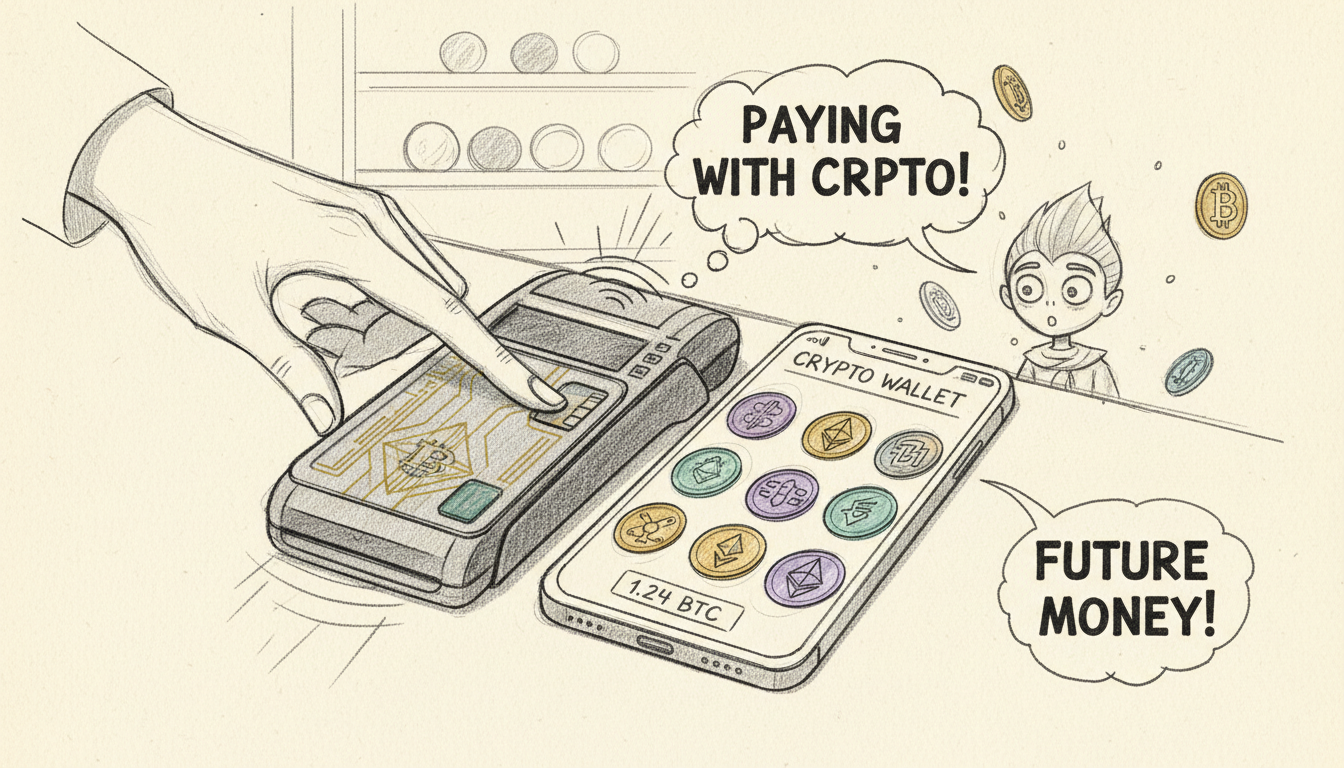
The payment sequence happens in seconds. It works like this:
- You tap or insert your card at a merchant terminal.
- The terminal sends an authorization request to the card network.
- The network routes the request to the card issuer.
- The issuer checks your available balance with the wallet or exchange provider.
- The provider quotes a conversion rate from crypto to fiat at that moment.
- You approve the purchase, and the provider sells the selected crypto.
- The issuer settles the merchant in fiat.
The conversion rate you get is not the mid-market rate you see on a price chart. Providers add a spread. The spread is the gap between the quoted price and the real exchange rate. A 2% spread on a 100 USDC purchase means you pay 102 USDC worth of crypto for a 100 USDC merchant charge.
The merchant never touches crypto. They receive fiat from the card network, exactly as they would from a regular debit card. Mastercard’s crypto card program makes this possible by letting issuers settle fiat on behalf of cardholders. The network sees a standard card transaction. The crypto conversion happens behind the scenes.
This flow matters because it affects timing and price. You might top up with BTC when it is worth $50,000. By the time you spend, it may be worth $48,000. The provider sells at the current market rate, not the rate you expected. You do not lock in a price until the moment of payment.
Crypto debit card vs crypto credit card
A debit card spends from funds you already have. A credit card gives you a revolving line of credit. With a debit card, you top up with crypto or fiat first. Your balance sets your spending limit. With a credit card, the issuer lends you money, and you repay later.
Debit cards use collateral or a pre-funded balance. You cannot spend more than what is loaded. Credit cards allow borrowing up to a credit limit. If you fail to repay, the issuer can liquidate collateral or pursue collection. Default risk sits with the issuer on a credit product. On a debit product, the risk is your volatility exposure.
Rewards differ. Some crypto debit cards pay cashback in a native token like CRO or in stablecoins. Credit cards may offer points or cashback in fiat. Borrowing on a credit card can generate interest charges if you carry a balance. Debit cards do not charge interest, but they may charge purchase fees. From my time working with AI agent platforms and DeFi protocols, I have seen debit-style cards dominate retail adoption. They are simpler to underwrite and easier for issuers to approve.
Where the fees hide: spread, FX, ATM, and card charges
The headline annual fee is rarely the full cost. You need to audit four fee categories before you pick a card. The first is the conversion spread. When the provider sells your crypto for fiat, it marks up the rate. A 1% spread on every purchase adds up faster than a $30 annual fee.
Foreign transaction and currency conversion fees come next. If you spend in a currency different from your card’s base currency, the network or issuer may add 1% to 3%. Some cards call this an FX fee. Some embed it in the spread. You need to read the schedule.
ATM withdrawal limits and charges work differently. Most crypto debit cards cap free ATM withdrawals per month. After the cap, you pay a flat fee per withdrawal, often $2 to $5. Some providers also charge an inactivity fee if you do not use the card for 6 or 12 months.
Card fees tied to staking tiers are the fourth category. The Crypto.com Visa card review on this site shows how staking CRO unlocks higher rewards but also locks up capital. Higher tiers may reduce ATM fees or spread, but the staked amount is illiquid. You trade liquidity for lower costs.
Live fee schedules change frequently. This section gives you an evaluation framework, not a permanent price list. Confirm the provider’s current fee page before committing.
The conversion spread is usually the largest hidden cost on a crypto debit card. Monthly spending of $10,000 at a 2% spread costs $200.
Which assets should you spend with a crypto card?
Spend stablecoins when you want to avoid volatility. USDC and USDT are pegged to the dollar, so their fiat value stays close to 1 USDC. If you fund the card with 500 USDC and spend it the next day, you spend roughly 500 dollars. Fund it with 0.01 BTC instead, and the value may move 3% or more in a day.
Tax and gain implications push the same answer. Selling BTC or ETH for fiat creates a taxable event in most jurisdictions. If you bought BTC at $20,000 and spend it at $55,000, you realize a $35,000 gain. Stablecoins generally create no gain or loss because their price is stable. Coinbase Card supports spending USDC and other supported assets, which lets you choose the least volatile option. Our Coinbase Card review covers its supported assets and fees.
Asset choice should track your unrealized gains, not convenience. If you hold BTC with a large gain, spending it through a card accelerates the tax bill. Convert to a stablecoin first if your jurisdiction allows tax-free swaps between crypto assets. But every conversion is itself a taxable event in some countries, so check local rules.
Tax implications of spending crypto
The IRS treats spending crypto as a sale or exchange of property. The IRS virtual currency FAQ makes this clear. When you pay with crypto, you dispose of an asset. Your sale price is the fiat value at the moment of payment. Your cost basis is what you originally paid for the crypto.
Consider an example. You bought 0.1 BTC for $4,000 in 2020. In 2026, you spend that 0.1 BTC at a coffee shop when BTC is worth $60,000. The purchase costs you $6,000 of Bitcoin. Your gain is $2,000. You report that gain on your tax return. The coffee itself cost $6,000 in crypto value, but you also owe tax on the $2,000 appreciation.
Cashback and rewards are additional taxable events. If a card pays you 50 USDC in rewards, the IRS may treat that as income. The value when received is the income amount. Some providers report these rewards, and some do not. You need to track them.
If the tax burden feels high, consider a cheaper off-ramp before spending. Selling crypto for fiat on an exchange first lets you choose the timing and the exchange rate. Then you spend fiat with a regular debit card. That avoids a taxable event at every coffee purchase.
How do you get a crypto debit card?
Follow these steps to get a crypto debit card:
- Choose a provider based on fees, supported assets, and regional availability.
- Complete KYC identity verification. Most issuers require a government ID, proof of address, and sometimes a selfie.
- Deposit or convert supported crypto into the card balance.
- The provider gives you a virtual card instantly and mails a physical card later.
Card issuance and jurisdiction vary. Some cards are not available in the US, the EU, or parts of Asia. Confirm the provider’s supported country list before you sign up. This ranking of the best crypto cards compares fees and rewards across issuers. I do not endorse any vendor.
Can you get a no-KYC crypto debit card in 2026?
No. There is no truly anonymous crypto debit card today. Every licensed issuer must run KYC and AML checks. The card network and the issuing bank require identity verification. Any provider that claims otherwise is either unlicensed or operating in a grey market.
You can reduce KYC friction but not eliminate it. A card that asks for only a phone number still needs a passport ID at activation. The truth about no-KYC crypto debit cards on this site details the regulatory reality. You trade privacy for card usability. A no-KYC card may work for a month, then freeze your funds when the issuer demands documents.
Frequently asked questions
Do crypto debit cards convert crypto to fiat automatically?
Yes. The card provider sells the selected crypto at the current market rate and settles the merchant in fiat. You do not manually convert before each purchase unless the card uses a pre-loaded fiat balance.
Which cryptocurrencies can I spend with a crypto debit card?
It depends on the provider. Most support stablecoins like USDC and USDT, plus major assets like BTC and ETH. If you keep a stablecoin balance between top-ups, our guide to the best USDC wallets covers where to hold it. Some support native exchange tokens. Check the supported asset list before signing up.
Can I withdraw cash from an ATM with a crypto debit card?
Yes, most cards allow ATM withdrawals. The card sells crypto for fiat at the ATM conversion rate, then dispenses cash. ATM fees apply, and free withdrawal limits are usually low. You may also pay a foreign ATM fee outside the card’s home currency.
Are crypto debit card rewards paid in crypto or fiat?
Rewards can be paid in crypto or fiat. Many cards pay cashback in a native token like CRO. Others pay stablecoins or fiat. Reward value is taxable as income in most jurisdictions.
Which countries allow crypto debit cards?
Availability varies by issuer. The US, UK, EU, and parts of Asia have multiple active programs. Some regions in Africa and Latin America have fewer options. Confirm the provider’s supported country list before applying.
Frequently asked questions
Do crypto debit cards convert crypto to fiat automatically?
Which cryptocurrencies can I spend with a crypto debit card?
Can I withdraw cash from an ATM with a crypto debit card?
Are crypto debit card rewards paid in crypto or fiat?
Which countries allow crypto debit cards?
Related tools
Keep reading
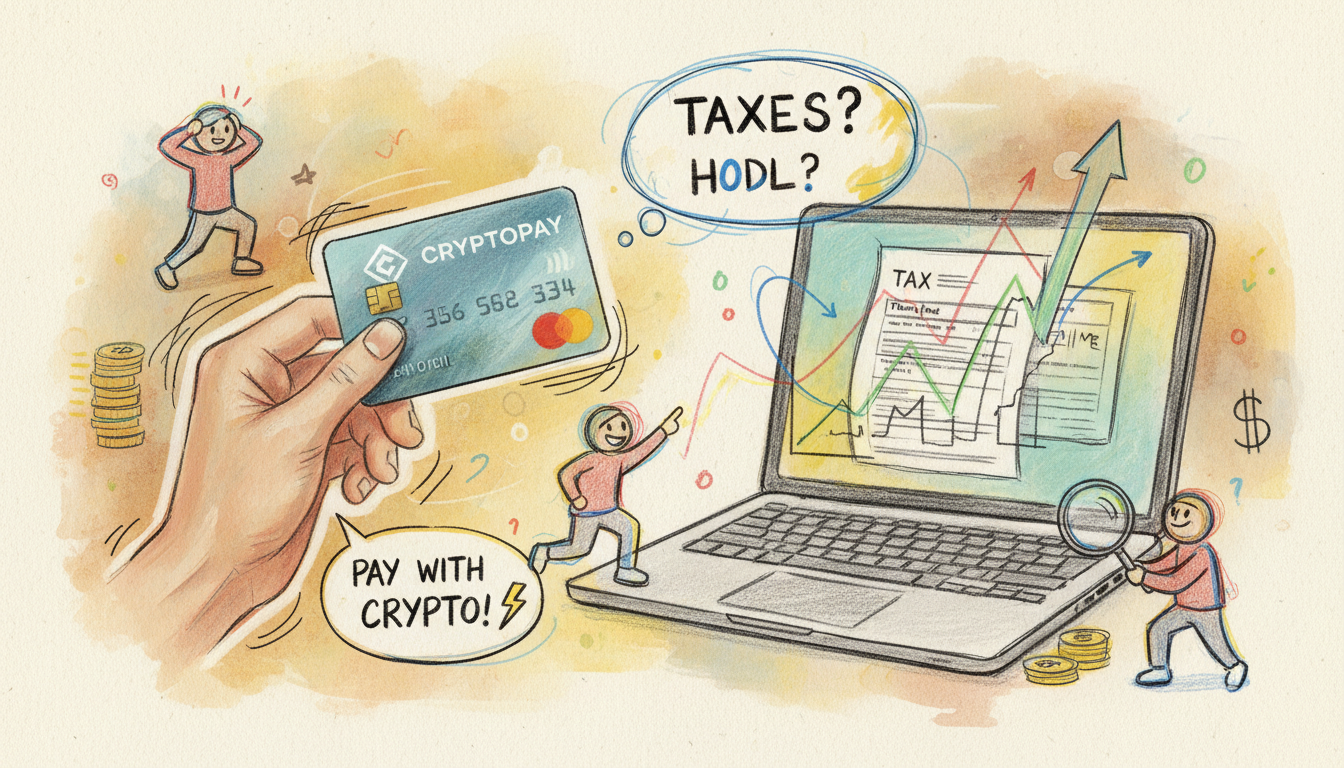
Crypto Card Tax: What You Owe When You Spend
Learn how crypto card tax works. Calculate capital gains, track records, and understand cashback taxes in the US, UK, Germany, and Portugal.
Crypto Debit Card Risks: 7 Checks Before You Spend
Crypto debit card risks include volatility, counterparty failure, hidden fees, and tax events. Use a regulated issuer, stablecoins, and small balances.
Best Crypto Card Europe: 7 Options Compared for 2026
Discover the best crypto card Europe offers in 2026. We compared fees, rewards, and KYC for 7 cards to find your ideal match.