Crypto Debit Card Risks: 7 Checks Before You Spend
Contents
- How a crypto debit card actually works before you spend
- How does price volatility drain your spending power?
- What happens if the card issuer or exchange fails?
- How do hacks, phishing, and card fraud hit crypto card users?
- What hidden fees and FX conversion spreads should you expect?
- Why do crypto cards get shut down by regulators?
- Is every crypto card purchase a taxable event?
- How do you protect yourself from crypto debit card risks?
- Frequently asked questions
Quick answer
Crypto debit card risks include volatility, issuer insolvency, exchange hacks, hidden conversion and FX fees, regulatory shutdowns, and a taxable event on every purchase. Protect yourself by using a regulated issuer, enabling 2FA, pre-funding with stablecoins, tracking cost basis, and reviewing all fees before spending.
Key takeaways
- Most crypto debit cards are custodial. The issuer or exchange holds your private keys, so you carry insolvency and hack risk even with a reputable brand.
- Every purchase can trigger a capital gains tax event because spending crypto is a disposal, not a payment.
- Pre-loading a card with USDC or another stablecoin removes intraday price volatility but not counterparty risk.
- No card removes all risk. Even regulated issuers can freeze funds or shut a region down, so load only what you plan to spend soon.
How a crypto debit card actually works before you spend
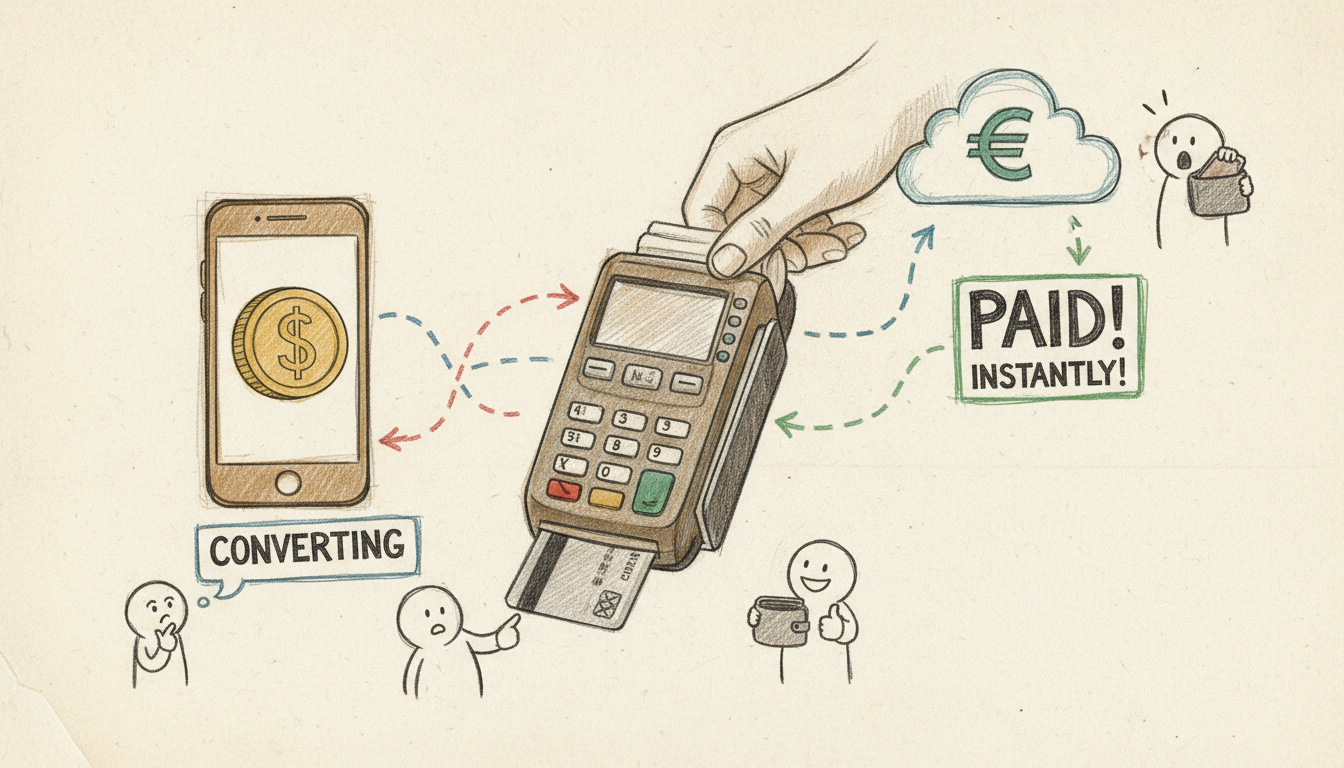
When you tap a crypto debit card at a merchant, the card network asks for fiat. The issuer doesn't send crypto to the merchant. Instead, it sells a portion of your crypto balance at that moment, converts it to USD or EUR, and settles with the merchant. On most cards, this is a custodial arrangement: the card provider or its partner exchange holds your private keys. A handful of cards work differently. MetaMask Card, ether.fi Cash, the European OKX Card, and Wirex One spend straight from a self-custody wallet and pull funds only at the moment you pay, so you keep your keys until the transaction settles.
Conversion timing matters. Some cards let you pre-load fiat or stablecoins, so conversion happens when you load, not when you spend. Others convert at the exact moment of purchase, exposing you to market moves. Coinbase Card's custodial structure shows this clearly: Coinbase holds the assets and moves them into a spendable balance when you make a purchase. I have spent over five years advising DeFi and exchange-linked products. This conversion step is where most users misunderstand risk.
How does price volatility drain your spending power?

Price moves fast. Say you load $500 of BTC onto your card on Tuesday morning. By Tuesday afternoon, BTC drops 5 percent. Your card now has $475 of spending power. That's a direct loss before you buy anything. This is volatility risk. It's the chance that fiat value changes between the moment you decide to spend and the moment the transaction settles. Even a few hours can matter with an asset like Solana or a memecoin. Settlement times vary by network and issuer. Some transactions settle instantly because the issuer has already converted funds. Others settle minutes later, enough time for a sharp wick.
You can cut most of this risk by pre-funding your card with a stablecoin such as USDC or EURC. Stablecoins track fiat, so a 5 percent swing is rare in normal conditions. You still face issuer risk, but not intraday price moves. Keep volatile assets in self-custody or a trading account. Move only what you plan to spend this week onto the card. Don't keep a full month of living expenses in BTC on a card linked to a hot wallet.
What happens if the card issuer or exchange fails?
If the issuer or its partner exchange goes bankrupt, your card balance sits with them. Crypto held on an exchange or card platform isn't covered by FDIC deposit insurance. That coverage protects bank deposits, not crypto. Some exchanges claim FDIC pass-through insurance on USD balances, but that doesn't extend to your BTC or ETH. If the company can't meet withdrawals, you become an unsecured creditor. You may wait years or get nothing.
Operational failures happen without bankruptcy. An exchange may freeze accounts due to a compliance review or a liquidity crunch. Your card stops working even though you did nothing wrong. The Binance Card shutdown is a real example. Binance closed its European Visa card on December 20, 2023, with about two months' notice, and users in several countries lost access. Our review breaks down how a large issuer can wind down a product quickly. Any custodial card carries counterparty risk. You can reduce it by choosing regulated issuers with public proof of reserves, but you can't remove it. Keep only spend-ready funds on the card. Keep the rest in self-custody.
How do hacks, phishing, and card fraud hit crypto card users?
Crypto card users face three main attack surfaces: the exchange account behind the card, the card itself, and phishing campaigns. An exchange hack can drain all connected card balances in minutes. Phishing links look like the card issuer's login page and harvest your credentials. Card skimming works the same as with a bank card, but crypto card fraud disputes often move slower. A traditional bank card chargeback can resolve in days. A crypto card dispute may take weeks because the issuer must reconcile blockchain records.
Protect the account layer first. Enable two-factor authentication using an authenticator app, not SMS. Use a unique email address for the card platform so a data breach at another service doesn't hand attackers your login. Keep only a small top-up balance. If the card is compromised, the damage is limited. Many card platforms let you freeze the card instantly from the app, but freezing doesn't reverse a transaction that already settled. Check for unexpected transactions daily and revoke any open API keys linked to the exchange. Card skimming at physical merchants is less common with crypto cards than with bank cards, but it still happens. Never type your exchange password on a public network and never share recovery phrases.
What hidden fees and FX conversion spreads should you expect?
Most crypto card issuers bury their revenue in three places: conversion, foreign exchange, and ATM withdrawals. When you spend BTC, the issuer sells it to fiat at a spread. That conversion fee usually lands between 0.5 and 3 percent. It may not appear as a line item. If your crypto price is quoted at a different rate, the difference is the spread. On top of that, spending in a currency other than the card's base currency triggers an FX fee. That can add another 1 to 3 percent. A purchase in Europe with a USD-denominated card often costs 2 to 4 percent in total hidden fees. ATM withdrawals can cost a fixed fee plus a percentage. Some issuers charge a monthly subscription even if you don't use the card.
Fee schedules differ widely. The Crypto.com Visa Card fee schedule shows how staking tiers reduce some fees but not others. The official Crypto.com card fees and limits page lists current charges. Compare before you load.
This table shows a practical range across major card types:
| Card type | Conversion fee range | FX fee range | ATM fee typical |
|---|---|---|---|
| Exchange-linked custodial card | 0.5% to 2% | 1% to 3% | $2 to $5 plus 1% |
| Prepaid stablecoin card | 0% to 0.5% to top up | 1.5% to 3% | $1 to $3 |
| Premium staking card | 0% to 1% after stake | 0% to 1% with perk | Varies |
This table is approximate. Always pull the current schedule from the issuer's help center before you commit. Hidden fees are one of the easiest risks to control because you can choose a card with a flat conversion rate.
Why do crypto cards get shut down by regulators?
Regulators can suspend a crypto card program with little notice. The Financial Conduct Authority has restricted or wound down several crypto card partnerships in the UK. The FCA cryptoassets guidance sets registration requirements, and many issuers have failed to meet them. Geographic restrictions vary by issuer and by your country of residence. A card that works in one EU state may not work in another, even with the same provider.
The Binance Card shutdown is the clearest warning. Users in multiple regions woke up to find their cards terminated after Binance's local partners pulled out, and Binance itself stopped serving new EU customers on July 1, 2026, after failing to secure a licence under the MiCA regulation. This is an operational risk, not a market risk. It can freeze your spending power overnight. No-KYC crypto debit cards expose you to more of this risk. They operate through smaller, less regulated partners and often disappear without a formal shutdown notice. These cards trade away regulatory protection, dispute rights, and sometimes any recovery path. If you need stable access, pick a card issued in a jurisdiction with clear crypto rules and a track record of compliance.
Is every crypto card purchase a taxable event?
In the United States, yes. IRS Notice 2014-21 treats crypto as property, not currency. When you spend crypto, you dispose of property. That triggers a capital gain or loss. The gain is the difference between the crypto's fair market value at the time of spending and your cost basis. If you bought BTC at $20,000 and later spend it when BTC is worth $70,000, you realize a $50,000 gain. That gain is taxable, even though you never sold for dollars. The card purchase is the taxable event, not the conversion that happened inside the issuer's system.
Tracking this is a real burden. Every card transaction needs four data points. You need the date, the amount of crypto spent, the fair market value in fiat at that moment, and your original cost basis. Most card statements don't give you cost basis. You must pull it from your exchange trade history or a dedicated tax tool. A worked example: you buy 0.1 BTC in January for $4,000, or $40,000 per BTC. In September you spend 0.01 BTC from the card for a $700 laptop. At that moment BTC is worth $70,000. Your cost basis for that 0.01 BTC is $400. Your realized gain is $300. That's a short-term capital gain if you held for less than a year. The IRS Notice 2014-21 on virtual currency is the primary US reference.
Tax treatment varies by country. The IRS guidance applies to US taxpayers only, and some jurisdictions exempt small personal use transactions.
How do you protect yourself from crypto debit card risks?
Start before you link any card. Run this checklist:
- Pick an issuer registered with a real financial regulator in your country.
- Check if the issuer or its partner exchange publishes proof of reserves.
- Enable 2FA with an authenticator app.
- Create a unique email address for the card account.
- Pre-fund with USDC, EURC, or another liquid stablecoin.
- Keep only the amount you plan to spend in the next two weeks.
- Review the fee schedule line by line before loading.
Pre-funding with stablecoins cuts intraday volatility to nearly zero. It doesn't cut counterparty risk. If the issuer fails, you still lose those stablecoins. That's the honest tradeoff. No card removes counterparty risk. The only way to avoid it is not to use a custodial card at all. These crypto debit card risks apply to every custodial card. For most people, a good card is one that limits exposure. Load small amounts, spend them, reload as needed. Don't treat a crypto debit card like a bank account. It's a spending tool, not a vault.
Our best crypto cards ranked by fees and features list compares the main options with these risks in mind. Choose one with a flat conversion rate and low FX fees. Avoid cards that require you to lock volatile assets for perks unless you can afford to lose that stake. Check the issuer's status quarterly. Regulations and partnerships change, and a card that's safe today may not exist next quarter. Keep records of every transaction for tax time. If the card issuer shuts down your region, have a backup off-ramp ready.
Frequently asked questions
Are crypto debit cards anonymous?
Most reputable crypto debit cards are not anonymous. They require KYC verification before you can order or use the card. Your identity links to every transaction on the card's ledger. Some no-KYC cards exist, but they carry higher counterparty risk and fewer legal protections. If privacy is your goal, understand that the card network and the issuer can see your spending.
Is crypto held on a card insured like a bank deposit?
No. Crypto held by a card issuer or exchange isn't covered by FDIC or equivalent deposit insurance. Some issuers may hold USD balances in an FDIC-insured account, but that coverage doesn't extend to BTC, ETH, or stablecoins. If the company fails, crypto balances are unsecured claims.
Which crypto asset should I load onto a card to reduce volatility?
Load a liquid stablecoin like USDC or EURC. Stablecoins track fiat and rarely move within a day. Avoid loading BTC, ETH, SOL, or memecoins onto a card unless you plan to spend them within hours. Stablecoin funding cuts volatility risk but not issuer or custody risk.
Can I reverse a fraudulent crypto card transaction?
It's difficult. Crypto card disputes often move slower than bank card chargebacks because the issuer must reconcile blockchain records. Some transactions settle instantly and can't be reversed after the fact. You may need to provide detailed evidence and wait weeks for a decision. Always freeze the card immediately and report the fraud to the issuer.
Do all crypto cards require KYC?
In most jurisdictions, regulated crypto cards require KYC. You must verify your identity before the card is issued. Some offshore or no-KYC cards exist, but they trade away regulatory protection and dispute rights. If a card promises no KYC, assume you're taking on more counterparty risk. Check the issuer's registration and track record before you deposit funds.
Frequently asked questions
Are crypto debit cards anonymous?
Is crypto held on a card insured like a bank deposit?
Which crypto asset should I load onto a card to reduce volatility?
Can I reverse a fraudulent crypto card transaction?
Do all crypto cards require KYC?
Related tools
Keep reading
Tria Card Review 2026: Fees, Cashback, Access Code and a Real Sign-Up
Tria card review from a real sign-up: fees, 4.5% to 6% cashback, limits, strict KYC, India and Indonesia availability, futures, Earn and the access code.
OKX Card Review 2026: Fees, Cashback, Countries and Limits
OKX Card review for 2026: 0.1% spread, 2% to 10% USDG cashback and its real monthly caps, every country it works in, and who should skip it.
Bybit Card Review 2026: Fees, Cashback, and Availability
Read our Bybit Card review for 2026. See cashback tiers, fees, and the countries where it's actually available. Get the facts before you apply.